

Asthma
Asthma is a long-term condition that narrows the airways and can make breathing harder at times. At Sleepscope, a respiratory physician can investigate your symptoms or help manage an existing diagnosis.

In asthma, a long-term lung condition, the sensitive airways that bring air into the lungs can become inflamed (swollen) and narrow when they meet a trigger. This makes it harder to breathe.
Wheezing, coughing, a tight chest, and shortness of breath are common symptoms. They vary from person to person and can come and go. Cool weather or exercise can bring on an asthma cough, and it can also start at night or early in the morning.
A flare-up (asthma attack) is when symptoms become worse than usual, either quickly or over hours or days, for example with a cold. Flare-ups can happen even when asthma is usually mild, and a written asthma action plan sets out what to do.
Call triple zero (000) immediately if you are short of breath and any of these apply: you cannot speak in full sentences, you have pain in your chest, arm, or jaw, your skin is pale and sweaty, your lips are blue, or you feel drowsy or confused.
Do not wait for a routine appointment or drive yourself to hospital.
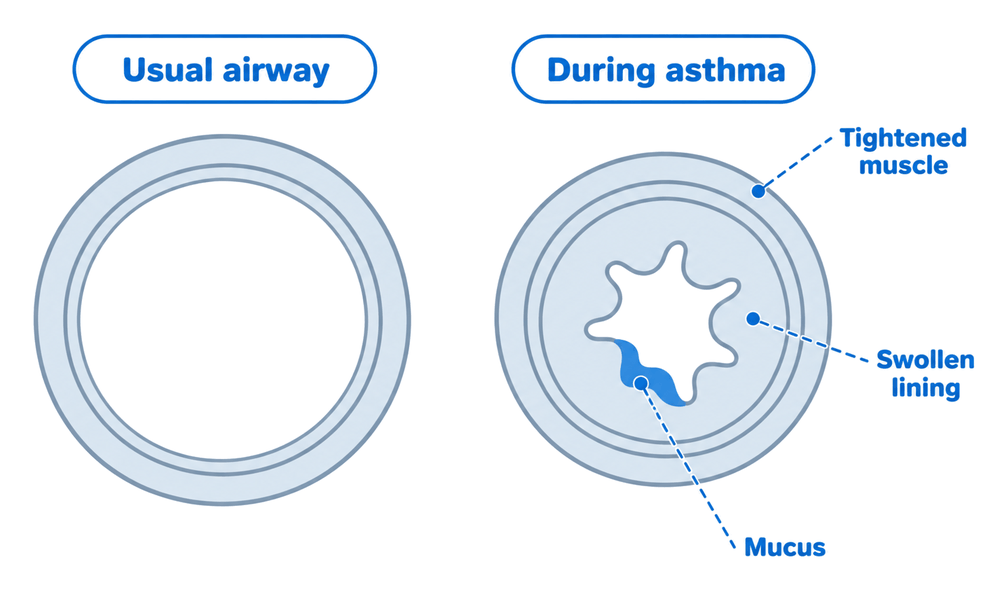
Air travels to the lungs through branching tubes called airways (bronchi). When asthma symptoms start, three changes can narrow these tubes, and they can happen at the same time. Between bouts of symptoms, breathing can be normal. Breathing tests can show how much the narrowing slows the flow of air and whether this varies.
A thin layer of muscle wraps around each airway. When this muscle tightens, the airway becomes narrower and air moves in and out less easily. A reliever relaxes the muscle, which helps the airway open again.
The lining inside the airways becomes inflamed and swollen, which narrows the space for air. Over time, a preventer reduces this inflammation.
The airways can make extra mucus, which can partly block them. A preventer also lessens the amount of mucus.
Why some people develop asthma is not fully understood. Asthma is more likely if close family members have asthma, hay fever, allergies, or eczema, and it can start at any age. Adults can also develop it after breathing in irritating fumes, or dust they are allergic to, over a long time. If symptoms happen mainly at work, please tell your doctor.
Triggers bring on symptoms and differ from person to person. Common triggers include colds and flu, exercise, cigarette or bushfire smoke, and pollen, dust, or mould. Cleaning products, perfumes, and some chemicals at work can also trigger symptoms, and pollen carried in the air during storms can bring on thunderstorm asthma.
Hay fever (allergic rhinitis), being overweight, and smoking or vaping can make asthma harder to manage. Treating hay fever, quitting smoking or vaping, and having a flu vaccination each year can help. Asthma and mental health are linked, so please talk to your doctor if you have been feeling low or anxious.
Asthma medications are usually inhaled. Relievers open the airways quickly when symptoms start, and preventers reduce the inflammation inside the airways over time, which lowers the chance of flare-ups. For adults, Australian guidelines now recommend treatment that includes an inhaled corticosteroid, a type of preventer, rather than a blue reliever on its own. Some inhalers combine a preventer with a reliever, so one inhaler can do both jobs.
Using an inhaler correctly helps the medication reach the lungs, and a spacer makes some inhalers easier to use. Your doctor, nurse, or pharmacist can check your technique. A short course of steroid tablets is sometimes needed for a severe flare-up. When asthma stays hard to control despite regular treatment, a respiratory physician may consider add-on treatments, including medications given by injection (biologics). Please do not change or stop your asthma medications without talking to your doctor.
A written asthma action plan, made with your doctor, lists your usual medications and doses. It also explains how to tell when asthma is getting worse and what to do then, including in an emergency. Please bring it to your appointments.
Regular asthma reviews, at least once a year, check your symptoms, medications, and inhaler technique, and update the plan. Asthma may not be well controlled if it wakes you at night or you need your reliever more than twice a week, so please see your doctor for a review.
No single test can confirm asthma. The diagnosis rests on your symptoms, an examination, and breathing tests. Spirometry measures how much air you can breathe out and how fast, before and after a reliever medication. An exhaled nitric oxide (FeNO) test measures nitric oxide in your breath, which shows inflammation in the airways and can support a diagnosis of asthma. Both are available at some Sleepscope clinics, and some inhalers need to be stopped before spirometry, as its page explains.
If asthma stays hard to control, the respiratory physician first checks the diagnosis, your inhaler technique, and whether your treatment needs adjusting. The physician also looks for other conditions that can make asthma worse, such as reflux or hay fever. Blood tests can look for signs of allergy and for a type of inflammation that helps guide treatment for severe asthma. The respiratory physician can refer you for them, and a separate pathology service carries them out.
Your GP or specialist can refer you for a respiratory consultation to find out whether you have asthma or to discuss an existing diagnosis. The respiratory physician will ask about your symptoms and how they affect daily life, and review your medical history, medications, and inhalers.
Fees are listed on each clinic's page, and the clinic will confirm them before your visit.
The consultation takes up to 30 minutes and needs no preparation. If spirometry or a lung function test is booked as well, some inhalers need to be stopped beforehand, as set out on that test's page.
Please arrive 10 to 15 minutes early to complete the forms. After your visit, the respiratory physician will send a letter to your referring doctor.
Sleepscope physicians see patients at clinics in Victoria and Queensland. If you have a referral, our team can confirm the location and appointment details.
View clinic locationsYes, with a valid referral from your GP or specialist, either to find out whether you have asthma or to talk about your treatment. Blood tests, if you need them, may be done by another provider.
Please talk to your doctor if a blue or grey reliever is your only asthma medication. For adults, Australian guidelines no longer recommend it as the only treatment, even when asthma seems mild, because it eases symptoms without treating the inflammation in the airways.
Please keep using your preventer as prescribed, even on days you feel well, because it reduces the inflammation that leads to flare-ups. Talk to your doctor before changing or stopping any medication.
Call triple zero (000) straight away if symptoms get worse very quickly, you are very short of breath or cannot speak comfortably, your lips look blue, or your reliever gives little or no relief. Say that it is an asthma emergency, and please follow the emergency steps in your asthma action plan while you wait.