Our Services
Obstructive Sleep Apnoea (OSA)

Obstructive Sleep Apnoea (OSA)

In obstructive sleep apnoea (OSA), the throat repeatedly narrows or closes during sleep, causing pauses in breathing and often loud snoring. At Sleepscope, a sleep physician can investigate your symptoms or help manage an existing diagnosis.

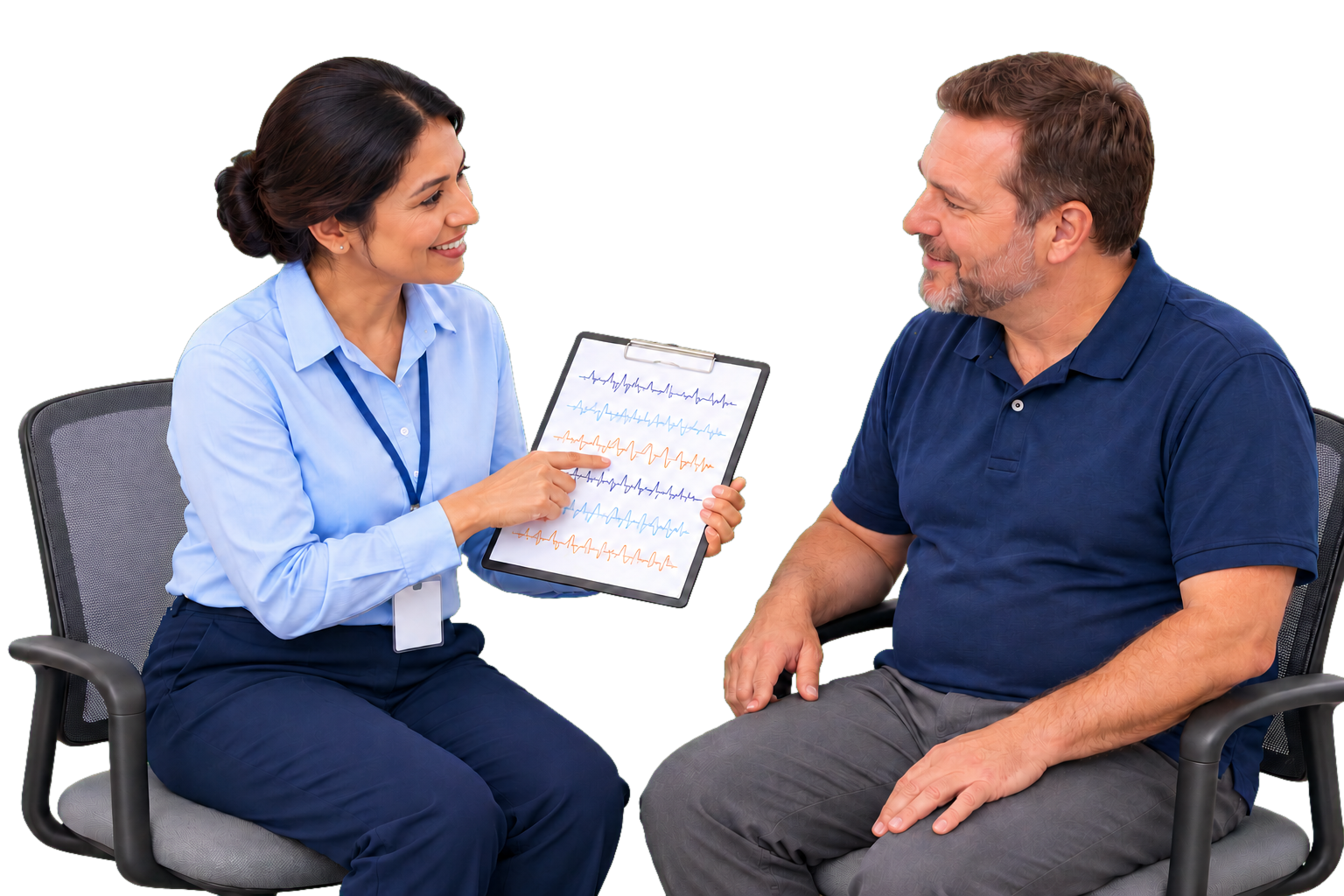
Illustrative consultation about snoring and sleep apnoea.

What obstructive sleep apnoea means

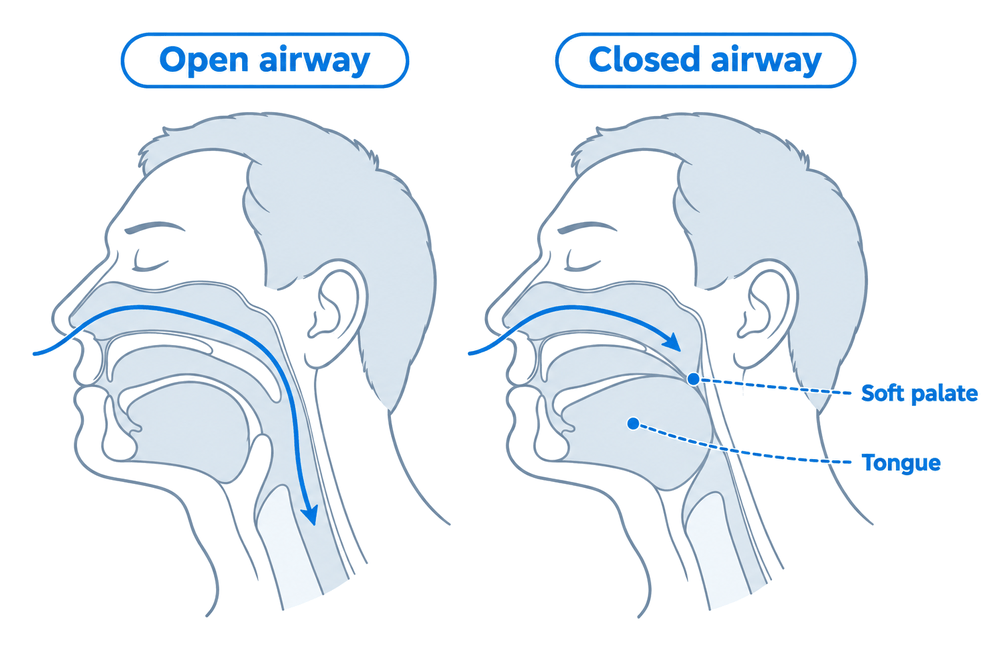
Two side views of a sleeping man: on the left the airway behind the tongue is open; on the right the soft palate and tongue have dropped back and closed it.

Obstructive sleep apnoea (OSA) is a long-term breathing disorder that happens during sleep. The throat (upper airway) narrows or closes many times during the night. Each time, breathing becomes shallow or stops for 10 seconds or more, and the oxygen level in the blood falls. A very brief waking, which you usually do not notice, lets breathing start again.

These pauses can happen many times an hour, and they break up your sleep. Treatment aims to keep the airway open during sleep and ease the symptoms.

Need urgent care?

Call triple zero (000) immediately if you are short of breath and any of these apply: you cannot speak in full sentences, you have pain in your chest, arm, or jaw, your skin is pale and sweaty, your lips are blue, or you feel drowsy or confused.

Do not wait for a routine appointment or drive yourself to hospital.

How severe is sleep apnoea?

A sleep study counts how often your breathing stops or becomes shallow in each hour of sleep. This number is called the apnoea-hypopnoea index (AHI), and fewer than 5 an hour is generally considered normal. Sleep apnoea is described as mild, moderate, or severe, mainly from the AHI. The sleep physician will explain what your result means, taking your symptoms and general health into account.

Mild sleep apnoea

With few symptoms, changes such as weight loss, less alcohol in the evening, or a change of sleep position may be enough. An oral appliance is another option.

Moderate sleep apnoea

Treatment such as CPAP or an oral appliance is often needed. The need is greater if you also feel sleepy during the day, or have heart disease, a past stroke, or high blood pressure that is hard to control.

Severe sleep apnoea

Your doctor may recommend CPAP. Treating moderate or severe sleep apnoea also aims to lower the chance of related health problems, such as high blood pressure.

Causes and symptoms

The muscles that hold the throat open relax during sleep, and in OSA the throat then narrows or closes more easily. Extra weight around the neck, large tonsils, or a large tongue can add to this. OSA is more common in men, in women after menopause, in older people, and when it runs in the family. Alcohol, smoking or vaping, sleeping tablets, and sleeping on your back can make it worse.

You might notice signs at night or during the day:

  • Loud snoring, or pauses in breathing that someone else notices.
  • Waking with a gasp or a choking feeling, or tossing and turning.
  • Waking unrefreshed, with a dry mouth or a headache.
  • Daytime sleepiness, irritability, or trouble concentrating and remembering.

These symptoms do not always mean sleep apnoea. Many people are not aware that their breathing pauses, so it helps if someone who shares your bedroom can describe your sleep. To look for sleep apnoea, your doctor will ask how you sleep, check your nose and throat, and may suggest a sleep study.

Treatment and everyday life

Treatments that keep the airway open

With continuous positive airway pressure (CPAP), you wear a mask over your nose, or your nose and mouth, and a small, quiet pump sends air to it through a tube. The air pressure holds your throat open while you sleep. CPAP only works while it is in use, so you wear it whenever you sleep, and getting used to it can take time.

An oral appliance, made and fitted by a dentist, holds the lower jaw forward during sleep and may suit mild to moderate sleep apnoea. If other treatments have not helped or are not right for you, or a problem such as large tonsils is narrowing the airway, surgery may be considered. The sleep physician will discuss which treatment may suit you, including alternatives to CPAP.

Weight, alcohol, and daily life

If you are overweight, losing weight can reduce sleep apnoea, and some people then need less treatment. It can also improve other conditions, such as high blood pressure and diabetes.

Alcohol and sleeping tablets relax the throat muscles and can make sleep apnoea worse, so it is worth limiting them, particularly in the evening. Please talk to your doctor before changing a prescribed medication. Other things that can help are giving up smoking and vaping, going to bed and getting up at regular times, and sleeping on your side instead of your back.

Sleep apnoea can cause sleepiness at work and on the road. Please do not drive while you feel sleepy, and ask your doctor how your condition and its treatment affect driving. Your doctor can also explain whether a fitness to drive assessment is needed.

How is sleep apnoea diagnosed?

Diagnosis brings together your symptoms, an examination, and an overnight sleep study. Your doctor may check your blood pressure and ask you to fill in a short questionnaire about how likely you are to doze in everyday situations (the Epworth Sleepiness Scale).

A home based sleep study

A home based sleep study records your breathing, heart rate, oxygen level, and muscle activity while you sleep in your own bed. It is available at some Sleepscope clinics, where the equipment is fitted, and you return it on the next day the clinic is open.

An in-lab sleep study

In a hospital sleep laboratory, a sleep scientist monitors the recording through the night. An in-lab study may be recommended if a home study does not give a clear answer, or for people with some heart, lung, or nerve and muscle conditions. The sleep physician can refer you for an in-lab sleep study.

Telling it apart from central sleep apnoea

In central sleep apnoea, breathing pauses during sleep because the brain's signals to breathe are not sent properly, even though the airway is open. It is less common than OSA and can occur with heart failure, after a stroke, or with some medications. A sleep study can show which type you have.

If you have been referred to Sleepscope

Your GP or specialist can refer you for a sleep consultation to find out whether you have sleep apnoea or to discuss an existing diagnosis. The sleep physician will ask about your sleep habits and how your symptoms affect daily life, review your medical history and medications, and may recommend further tests. They will also give you guidance on managing your symptoms.

Fees are listed on each clinic's page, and the clinic will confirm them before your visit.

The consultation takes up to 30 minutes and needs no preparation. Please arrive 10 to 15 minutes early to complete the forms. After your visit, the sleep physician will send a letter to your referring doctor.

What to bring

  • Your GP or specialist referral and any previous sleep study reports.
  • Your Medicare card.
  • A list of your medications and supplements, including doses.
  • Notes on how you sleep and when you feel sleepy during the day.
  • An account from anyone who has noticed snoring or pauses in your breathing.

Where you can be seen

Sleepscope physicians see patients at clinics in Victoria and Queensland. If you have a referral, our team can confirm the location and appointment details.

View clinic locations

Common questions

Does Sleepscope provide a sleep apnoea consultation?

Yes, with a valid referral from your GP or specialist, either to find out whether you have sleep apnoea or to talk about your treatment. Home based sleep studies are available at some Sleepscope clinics, and if an in-lab study is needed, the sleep physician can refer you to a hospital sleep laboratory.

Is snoring the same as sleep apnoea?

No. Snoring is the sound of the throat vibrating during sleep, and many people snore without having sleep apnoea. In sleep apnoea, breathing also becomes shallow or stops. Please see your doctor if your snoring is loud, someone has noticed pauses in your breathing, or you feel sleepy during the day.

When should I contact a doctor?

Please see your GP or sleep physician if your snoring or sleepiness becomes worse, or if your treatment is not helping or is hard to use. Call triple zero (000) if you have severe difficulty breathing. Do not wait for a routine appointment.

What if I feel better after starting CPAP?

Please keep using it as advised. CPAP keeps the airway open while you use it, but the pauses in breathing come back soon after it is stopped. If your weight or symptoms change a lot, please ask your sleep physician whether your treatment needs to change.