

CPAP Therapy
CPAP treats obstructive sleep apnoea with a mask and a small machine that stop the throat closing during sleep. At Sleepscope, a sleep physician can discuss whether it may suit you and review your treatment.
In obstructive sleep apnoea, the throat narrows or closes many times during sleep. Each time, breathing becomes shallow or stops for a short while, the oxygen level in the blood falls, and a brief waking breaks up your sleep.
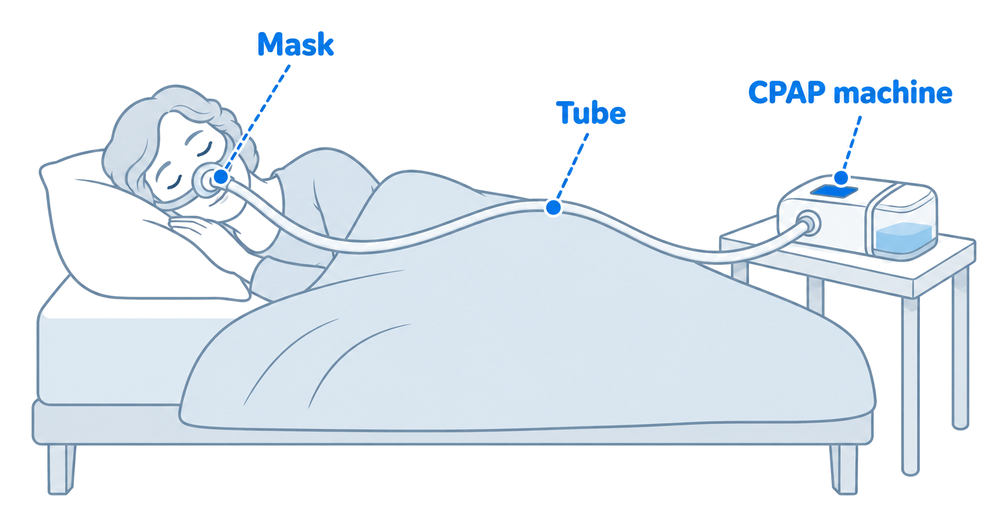
With continuous positive airway pressure (CPAP), you wear a mask while you sleep, and a tube links it to a small, quiet machine. The machine pushes room air into the mask at a slightly raised pressure, and that pressure stops the throat from closing.
The pressure is set to suit you, because people need different amounts. CPAP holds the airway open only while you are wearing it, so the breathing pauses come back soon after it is stopped.
Call triple zero (000) immediately if you are short of breath and any of these apply: you cannot speak in full sentences, you have pain in your chest, arm, or jaw, your skin is pale and sweaty, your lips are blue, or you feel drowsy or confused.
Do not wait for a routine appointment or drive yourself to hospital.
Starting CPAP involves finding the pressure you need and a mask that is comfortable. Please read the user guide that comes with your machine before you use it.
People with uncomplicated obstructive sleep apnoea can start CPAP at home with a self-adjusting machine, which finds the pressure they need over one or more nights.
For others, the pressure is set during an overnight CPAP titration study. While you sleep wearing CPAP, a sleep scientist raises the pressure in small steps until the breathing pauses stop, aiming for no more pressure than you need. This is recommended for some people with heart or lung conditions or central sleep apnoea. The study takes place in a hospital sleep laboratory, and the sleep physician can refer you.
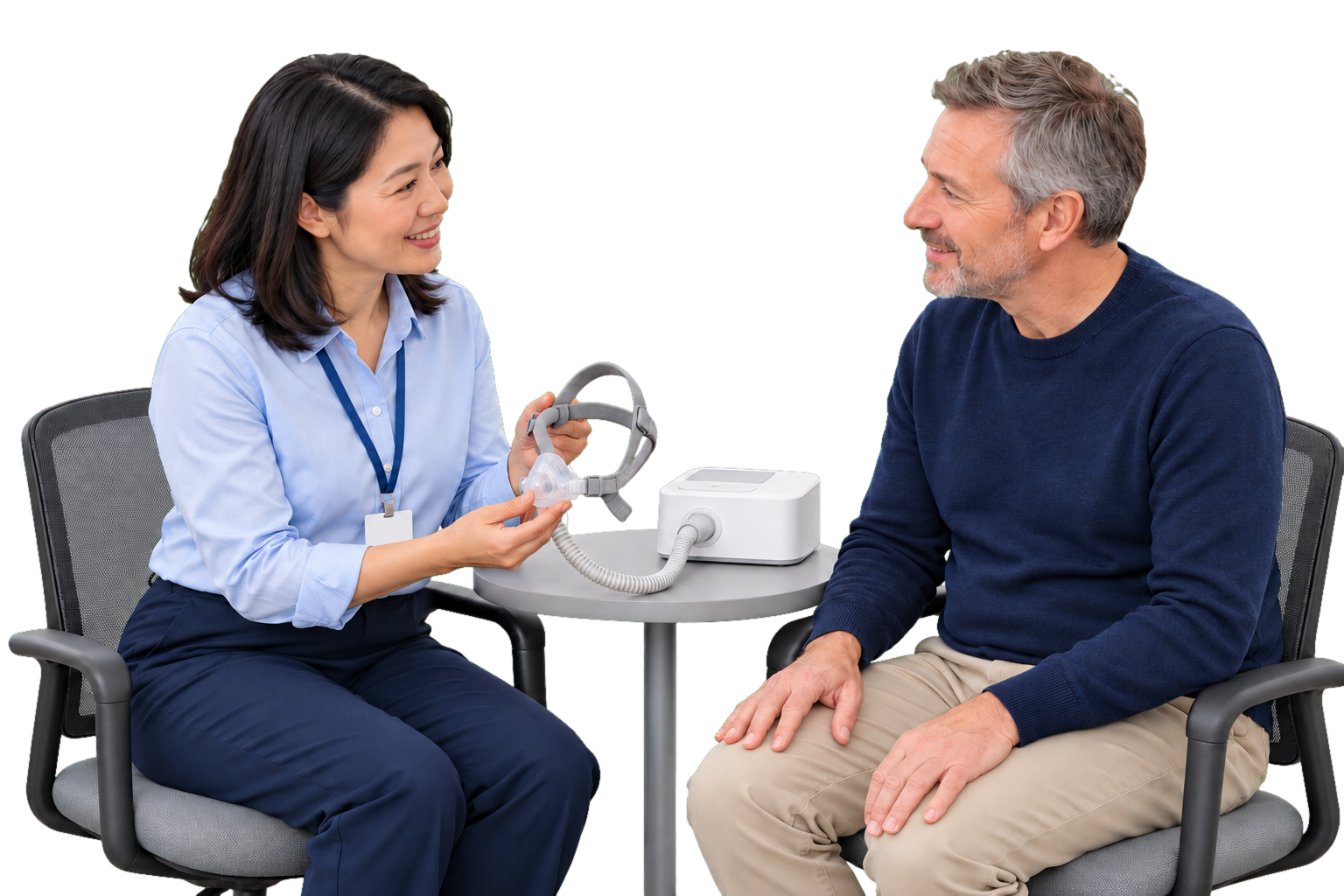
Before starting, it helps to learn how the machine works and to try masks until one fits comfortably, as this makes it easier to keep using CPAP.
The usual problems are a dry, blocked, or runny nose, a dry throat when air escapes through the mouth, and air leaking from the mask. Water can also collect in the tube on cold nights. These can often be eased with a different mask, a humidifier, or a covered or heated tube. Some people also notice bloating. Please tell the sleep physician about any heart or lung condition, including a collapsed lung in the past, because some of these need extra care with CPAP.
For moderate or severe obstructive sleep apnoea, doctors generally recommend CPAP. Mild sleep apnoea does not always need treatment, and CPAP is one of several options the sleep physician may discuss. CPAP can also help some people with other breathing problems in sleep, including some types of central sleep apnoea.
A sleep study comes first, to confirm sleep apnoea and show how severe it is. This can be a home based sleep study, or an in-lab sleep study in a hospital sleep laboratory, for which the sleep physician can refer you. The result alone does not decide your treatment. The sleep physician also considers your symptoms, your general health, and what you feel able to keep using, and other treatments may suit some people.
Some machines keep the pressure the same all night, at a level chosen for you. Self-adjusting machines change the pressure as you sleep, which can suit people whose pressure needs rise and fall during the night, for example with sleeping position. The ramp setting on many machines starts at a lower pressure and reaches your full pressure after 15 to 30 minutes, which can make it easier to fall asleep with the mask on. The sleep physician can discuss which type may suit you.
Masks come in several styles: some cover the nose, some sit at the nostrils, and some cover the nose and mouth. If air escapes through your mouth during sleep, a mask over the nose and mouth or a chin strap can help. When CPAP sounds noisy, a leak around the mask is the usual cause, and adjusting the straps or changing the mask often fixes it.
A humidifier fitted to the machine warms the air and adds moisture, which can ease a dry, blocked, or runny nose. Some people use it every night, others only in winter, and some do not need one at all. CPAP machines and masks come from CPAP equipment suppliers, and some suppliers hire out the machines.
A bilevel machine is a different device. It gives a higher pressure as you breathe in than as you breathe out, and it is used when breathing needs extra support during sleep.
Many people need a while before sleeping with CPAP feels normal, and a bed partner may need time to adjust as well. Using it for part of the night at first and adding time gradually is a common way to start. Wearing the mask for a while before bed, for example while watching television, can help it feel familiar.
Please wear CPAP every time you sleep, daytime naps included, because the breathing pauses return as soon as it comes off. If you are going away, take it with you and check the power supply where you are going. Your airline can tell you about carrying it on board, and it may ask for a letter from your doctor.
Before an operation, please let the surgeon and anaesthetist know that you use CPAP, and take it to hospital with you. Clean the mask, straps, and tube each week, and look after the humidifier as the manufacturer's instructions describe.
The sleep physician can review how your treatment is going at a later consultation, including how you feel during the day and any trouble with the mask or machine. Dealing with problems promptly can make it easier to keep using CPAP.
The pressure you need can change over time, for example with a change in weight, as you get older, or with some medications. Please see your doctor if snoring or daytime sleepiness comes back, and talk to your sleep physician before you stop CPAP. Call triple zero (000) if you have severe difficulty breathing.
You will need a valid referral from your GP or specialist for a sleep consultation. The sleep physician will ask about your sleep habits and how your symptoms affect daily life, review your medical history and medications, and may recommend further tests. They can also discuss whether CPAP may suit you and, at a later consultation, how your treatment is going.
Fees are listed on each clinic's page, and the clinic will confirm them before your visit.
The consultation takes up to 30 minutes and needs no preparation. Please arrive 10 to 15 minutes early to complete the forms. After your visit, the sleep physician will send a letter to your referring doctor.
Sleepscope physicians see patients at clinics in Victoria and Queensland. If you have a referral, our team can confirm the location and appointment details.
View clinic locationsYes, with a valid referral from your GP or specialist. A Sleepscope sleep physician can assess your sleep, discuss whether CPAP or another treatment may suit you, and review how your treatment is going at a later consultation.
Please tell your sleep physician. Some people feel better the next day, others take longer to notice a change, and some still feel tired. Tiredness can also have other causes, and a leaking mask, the pressure setting, or using CPAP for only part of the night may need attention.
Please try not to. Without it, the breathing pauses return straight away, and symptoms such as snoring and sleepiness can come back quickly. One night off can also turn into a longer break. If you do miss a night, please do not drive if you feel sleepy.