


Shift Work and Body Clock Disorders

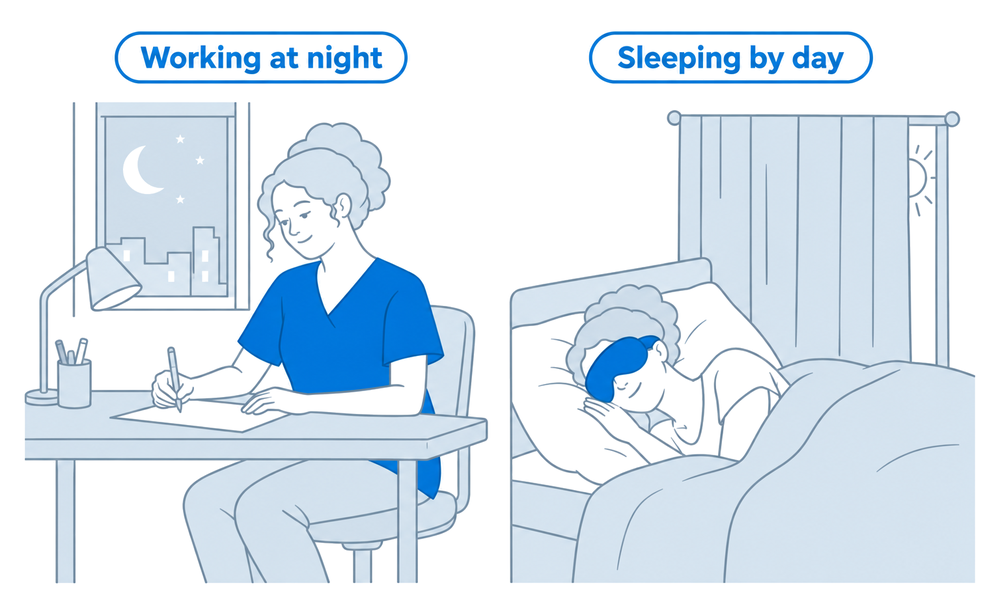
The body clock (circadian rhythm) is the body's internal timing system. It is set mainly by light, and the hormone melatonin rises in the evening to prepare the body for sleep. Normally, the body clock favours sleep at night and alertness during the day.
Sleep problems can start when the times you sleep and the body clock are out of step. Night shifts and early starts ask you to sleep when the body clock is set for waking. In delayed or advanced sleep phase, the body clock itself runs later or earlier than usual.
Call triple zero (000) immediately if you are short of breath and any of these apply: you cannot speak in full sentences, you have pain in your chest, arm, or jaw, your skin is pale and sweaty, your lips are blue, or you feel drowsy or confused.
Do not wait for a routine appointment or drive yourself to hospital.
Body clock sleep problems can come from work hours or travel, or from the timing of the body clock itself.
Jet lag is a short-term example. After a flight across several time zones, the body clock usually takes at least two or three days to adjust, and it can be harder after travelling east.
Night work means sleeping during the day, against daylight, and early starts cut into evening sleep. The sleep problems this causes are known as shift work disorder. Shift workers sleep about an hour less each day on average than people who work during the day, and many feel tired both at work and at home. Sleep loss affects how well you perform, and it makes accidents more likely at work and while driving.
You do not feel sleepy until very late at night and find it hard to wake in the morning, although sleep is normal in length when you can choose your own times. It is more common in teenagers. Morning sleepiness can be a problem, including when driving.
You feel sleepy early in the evening, around 8 or 9 pm, and wake very early in the morning, unable to get back to sleep. It becomes more common from middle age onwards, and it can lead to too little sleep and daytime sleepiness.
Please describe your work hours or roster, when you sleep on work days and days off, and how long it takes you to fall asleep. Tell the doctor how alert you feel at work, at home, and when driving, and whether you have nodded off or had a near miss on the way home.
A sleep diary is the main record for body clock problems. For at least a week, note when you go to bed and wake up each day, any naps, and when you feel sleepy or alert. Keep every entry, including the nights that went badly, so the doctor can see the whole pattern.
Poor sleep or sleepiness can also come from other causes, such as sleep apnoea, restless legs, low mood, or a medication. Please mention any snoring or pauses in breathing that someone has noticed, and list every medication and supplement you take, including melatonin.
Treatment aims to line up your sleep with the body clock, or to move the body clock towards the hours you need to keep. The plan will depend on the type of problem, your work hours, and your health.
Light has a strong effect on the body clock. Morning sunlight can help a delayed body clock move earlier, and bright light in the evening can help an advanced one move later. Bright light late at night can push the body clock later, so dim screens and lights before bed. Keeping the same wake time each day, including weekends, also helps.
For shift work, protect your main sleep. Keep the bedroom cool, dark, and quiet, and use earplugs or an eye mask if needed. Wear sunglasses on the way home after a night shift to limit bright light before you sleep. Keep naps short if your main sleep is due within four to six hours. Caffeine can help alertness on shift but should not be taken close to bedtime, and alcohol should not be used as a sleep aid.
Melatonin is a hormone the body makes mainly at night, and it is also available as a medication. Please speak with your doctor before taking it. They will check whether it suits you, how much to take, and when, because the timing matters for the body clock. Melatonin causes drowsiness, so it should not be taken before driving.
Body clock problems are usually identified from your history and a sleep diary. The sleep physician will look at the pattern of your sleep across work days and days off.
If another sleep problem is suspected, such as sleep apnoea, the sleep physician may recommend a home based sleep study, which records your breathing, heart rate, oxygen level, and muscle activity while you sleep in your own bed. Blood tests can look for other causes of tiredness. The sleep physician can refer you for them, and a separate pathology service carries them out.
You will need a valid referral from your GP or specialist for a sleep consultation. The sleep physician will ask about your sleep habits, your work hours, and how your sleep affects daily life, review your medical history and medications, and may recommend further tests. They will also give you guidance on managing your sleep.
Fees are listed on each clinic's page, and the clinic will confirm them before your visit.
The consultation takes up to 30 minutes and needs no preparation, although a sleep diary from the weeks before is helpful to bring. Please arrive 10 to 15 minutes early to complete the forms. After your visit, the sleep physician will send a letter to your referring doctor.
Sleepscope physicians see patients at clinics in Victoria and Queensland. If you have a referral, our team can confirm the location and appointment details.
View clinic locationsYes. A GP or specialist can refer you to a Sleepscope sleep physician for sleep problems linked to shift work or to the timing of the body clock.
A short nap of 15 to 20 minutes can boost alertness during a night shift. Allow time to wake up fully before driving or other tasks that need full attention, because grogginess after waking usually lasts 15 to 30 minutes.
Please do not keep driving while you feel drowsy. Pull over somewhere safe, rest for 15 to 20 minutes, and walk around before driving on. If you are often drowsy at the wheel, see your doctor.