

COPD
COPD is a long-term condition of the lungs that makes it harder to breathe. At Sleepscope, a respiratory physician can investigate your symptoms or help manage an existing diagnosis.

In chronic obstructive pulmonary disease (COPD), a long-term lung condition, the airways become narrower and air can become trapped in the lungs, so breathing becomes harder. It includes emphysema and chronic bronchitis.
The changes to the airways are usually permanent, but treatment can ease symptoms and slow the condition down. Symptoms that worsen within a short time, usually a few days, are called a flare-up (exacerbation). Flare-ups need early treatment, so please see your doctor when one starts.
Call triple zero (000) immediately if you are short of breath and any of these apply: you cannot speak in full sentences, you have pain in your chest, arm, or jaw, your skin is pale and sweaty, your lips are blue, or you feel drowsy or confused.
Do not wait for a routine appointment or drive yourself to hospital.
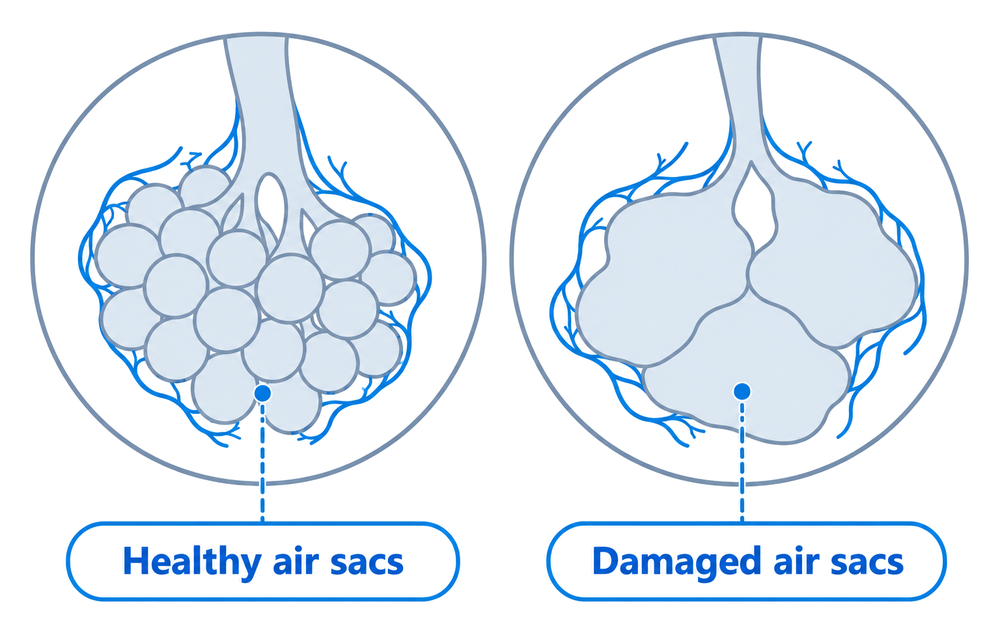
The windpipe divides into airways (bronchi) that branch into smaller tubes and end in tiny air sacs (alveoli), where oxygen passes into the blood. COPD can affect the airways, the air sacs, or both, and it involves one or more of three changes. Spirometry and a lung function test help show how COPD is affecting your breathing.
The airways become narrower, so air moves in and out of the lungs less easily. Spirometry measures this narrowing.
In emphysema, the air sacs are damaged and air becomes trapped in the lungs, which makes it hard to breathe in. A gas transfer test shows how well oxygen moves from the lungs into the blood.
In chronic bronchitis, an irritated airway lining produces large amounts of mucus. This causes an ongoing cough that brings up phlegm and adds to breathlessness.
Smoking is the main cause of COPD, and the risk remains for people who smoked in the past. Other causes include second-hand smoke and long-term exposure to dust, fumes, or pollution, including at work. Asthma, alpha-1 antitrypsin deficiency (a rare inherited condition), and lung problems or repeated chest infections as a child can also play a part.
Symptoms often come on slowly and can be mistaken for getting older or being unfit. They include:
These symptoms do not always mean COPD. Your doctor will ask about them, examine you, and use spirometry to work out the cause. If you are over 35 and have ever smoked, or have worked with dust or fumes, your GP can check your lungs.
COPD medications are usually inhaled. A reliever eases breathlessness quickly, and maintenance inhalers are used every day to control symptoms and help prevent flare-ups. As COPD changes over time, some people need an inhaler that combines more than one medication.
Using an inhaler correctly helps the medication reach the lungs, and many people do not use theirs correctly. Your doctor, nurse, or pharmacist can check your technique. During a flare-up, your doctor may add other medications, such as steroid tablets, or antibiotics if an infection is likely. Please keep using your medications as prescribed, even when you feel better.
A written COPD action plan, prepared with your doctor, sets out your usual symptoms and medications and what to do when symptoms change. Your doctor will review it with you over time.
Regular exercise helps, and a pulmonary rehabilitation program teaches exercise, breathing techniques, and ways to save energy. Programs run outside Sleepscope, through hospital and community services, and your GP or respiratory physician can refer you.
Stopping smoking limits further damage to the lungs, and your GP or pharmacist can help you quit. Yearly influenza vaccination, pneumococcal vaccination, and other recommended vaccinations help protect against the chest infections that often trigger flare-ups.
Diagnosis brings together your symptoms, your history of smoking and work, an examination, and a breathing test. COPD can only be confirmed with spirometry, because its symptoms can be similar to those of asthma and other conditions. Earlier results help show whether anything has changed.
Spirometry measures how much air you can blow out and how fast, before and after a reliever medication. A lung function test adds a gas transfer test. Both are available at some Sleepscope clinics, and some inhalers need to be stopped beforehand, as each test's page explains.
A chest X-ray or CT scan takes pictures of the lungs. Sleepscope offers both through Scope Radiology, which is at M-City Clayton, in Melbourne's south-east.
Your oxygen level can be checked with a small clip on your finger. Blood tests can look for other causes of breathlessness, such as anaemia. The respiratory physician can refer you for them, and a separate pathology service carries them out.
Your GP or specialist can refer you for a respiratory consultation to find out whether you have COPD or to discuss an existing diagnosis. The respiratory physician will ask about your breathing and how it affects daily life, and review your medical history, medications, and inhalers.
Fees are listed on each clinic's page, and the clinic will confirm them before your visit.
The consultation takes up to 30 minutes and needs no preparation. If spirometry or a lung function test is booked as well, some inhalers need to be stopped beforehand, as set out on that test's page.
Please arrive 10 to 15 minutes early to complete the forms. After your visit, the respiratory physician will send a letter to your referring doctor.
Sleepscope physicians see patients at clinics in Victoria and Queensland. If you have a referral, our team can confirm the location and appointment details.
View clinic locationsYes, with a valid referral from your GP or specialist, either to find out whether you have COPD or to talk about your treatment. Sleepscope offers chest X-rays and CT scans through Scope Radiology. Blood tests and pulmonary rehabilitation, if you need them, may be arranged with another provider.
No. Each narrows the airways, but asthma and COPD are separate conditions. In asthma, medications can usually return breathing to normal, while in COPD they are less able to do so. Some people have both.
A written COPD action plan can explain what to do when symptoms change. Please see your doctor promptly if you cough more than usual, find it harder to breathe, bring up more or thicker phlegm, have a fever, or feel more tired than usual, because acting early on a flare-up can help. Call triple zero (000) if you have any of these: breathlessness that makes talking hard, drowsiness or confusion, or a blue or grey tinge to your lips or fingernails. Do not wait for a routine appointment.
Please keep using your maintenance inhalers as prescribed, even on days you feel well, because they help control symptoms and prevent flare-ups. Talk to your doctor before changing or stopping any medication.