

Multiple Sleep Latency Test (MSLT)
A multiple sleep latency test (MSLT) measures how quickly you fall asleep during daytime naps. It helps diagnose narcolepsy and idiopathic hypersomnia. The test takes place in a hospital sleep laboratory.
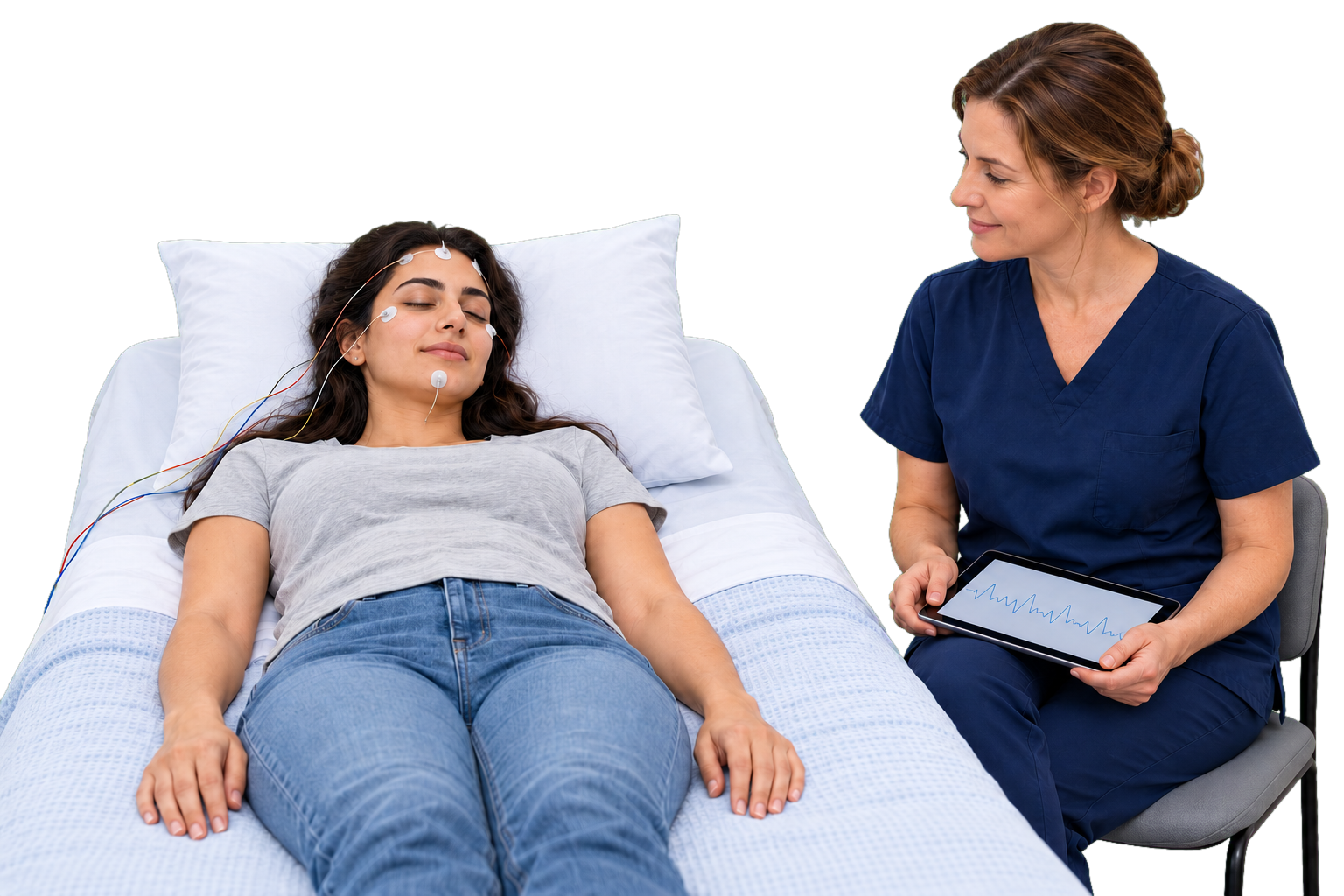
The multiple sleep latency test (MSLT) is sometimes called a daytime nap test. Sleep latency means the time it takes to fall asleep, and the test measures it in several naps across one day to show how sleepy you are.
The MSLT takes place in a hospital sleep laboratory on the day after an overnight sleep study. You have four or five chances to nap, two hours apart, while sensors record when you fall asleep and whether dreaming (REM) sleep begins. The pattern across the naps helps show what may be causing your sleepiness.
Call triple zero (000) immediately if you are short of breath and any of these apply: you cannot speak in full sentences, you have pain in your chest, arm, or jaw, your skin is pale and sweaty, your lips are blue, or you feel drowsy or confused.
Do not wait for a routine appointment or drive yourself to hospital.
The MSLT follows the overnight study in the same sleep laboratory, so you stay on after waking. The test usually finishes in the late afternoon, and the laboratory will tell you the expected finishing time.
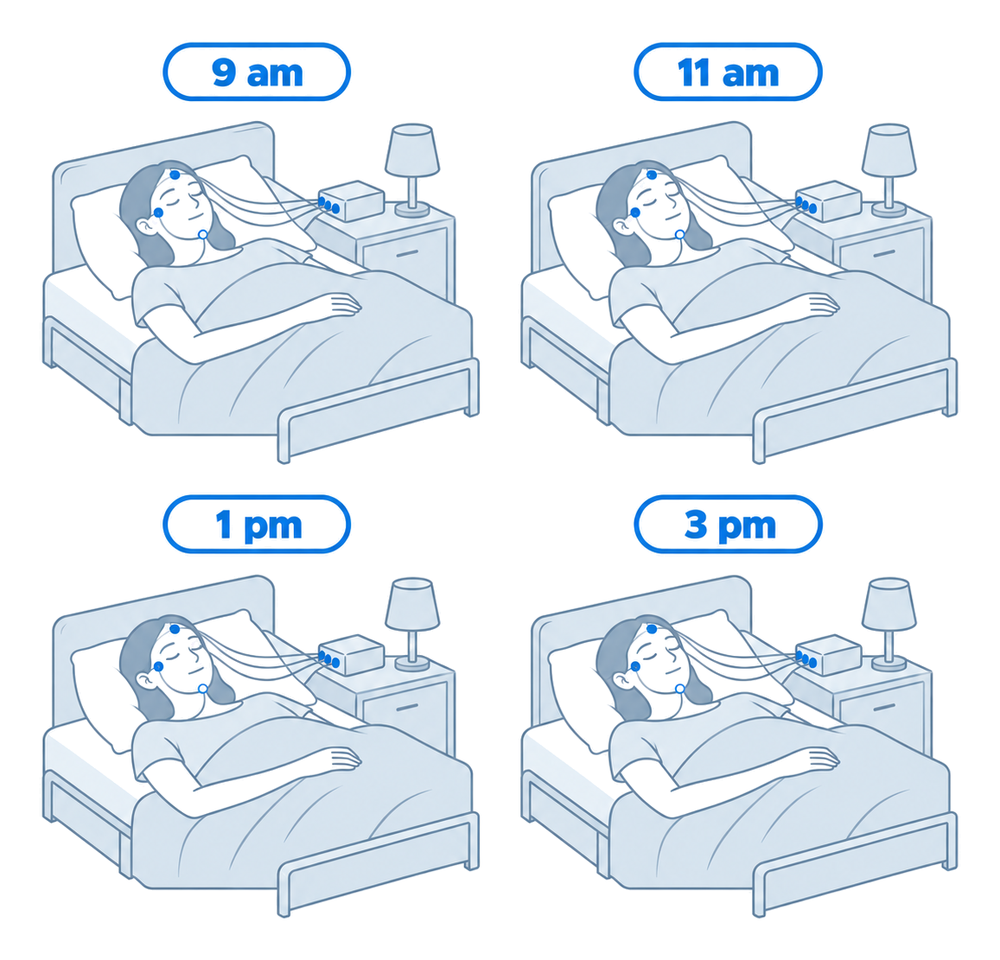
The first nap is usually a couple of hours after you wake, and the naps are often at about 9 am, 11 am, 1 pm, and 3 pm.
At each nap, you lie down in bed with 20 minutes to fall asleep if you can. The sensors record whether you sleep and what kind of sleep you have.
Please switch your phone off or to silent before each nap, so a call or message does not disturb the test.
Between the naps you get up and stay awake until the next one. Please tell the sleep scientist if you feel unwell at any time during the day.
Caffeine can make it harder to fall asleep, so you may be asked to avoid it on the day of the overnight study and on the test day. If you usually have a lot of caffeine, the laboratory may suggest cutting down gradually beforehand, which helps avoid headaches.
Alcohol and some other substances can also change the result, so please avoid them as the laboratory advises, from before the overnight study until the test ends.
A sleep physician may recommend an MSLT if you are very sleepy during the day despite enough sleep at night, and narcolepsy or idiopathic hypersomnia is suspected. Other causes of sleepiness, such as too little sleep, sleep apnoea, or medications, are usually looked at first.
The overnight study the night before checks that you slept enough and looks for other sleep disorders that could explain the sleepiness. A different test, the maintenance of wakefulness test (MWT), measures how well you can stay awake rather than how quickly you fall asleep.
For each nap, the recording shows how long you took to fall asleep and whether REM sleep began. The report gives the average time to fall asleep across all the naps, and the number of naps in which REM sleep appeared.
Narcolepsy can show as falling asleep quickly in the naps and going into REM sleep. Falling asleep quickly without REM sleep may point to idiopathic hypersomnia. The sleep physician considers the result together with your symptoms, the overnight study, and how you slept in the weeks before.
A result does not give a diagnosis on its own. Medications, too little sleep, and other sleep disorders can affect it, and the test is sometimes repeated if the result does not match your symptoms. Please tell your doctor if sleepiness continues or changes.
The sleep laboratory will give you an information sheet with the test details, the expected finishing time, and any changes to medications or caffeine. You will also be given a written plan for your medications for the two weeks before the test.
Please keep regular sleep times and get enough sleep in the two weeks before the test, because too little sleep can affect the result. You may be asked to keep a sleep diary over that time.
Some medications, including some antidepressants, can change REM sleep or how sleepy you feel. Your doctor will talk with you about whether to keep taking each one before the test. Stopping is not always possible, and any medication you keep taking is recorded so the result can take it into account.
Please do not stop or change a medication without your doctor's advice. Some medications can cause withdrawal symptoms if they are stopped suddenly, so any change is planned with you, sometimes by lowering the dose slowly. You may also be asked for a urine sample, which is checked for medications and other substances that can affect the result.
The sensors are removed once the last nap ends, and you can go home. Your skin may look slightly red where the patches or cream were, and this fades quickly. Please do not drive if you feel sleepy, and ask someone to take you home. A report goes to the doctor who referred you for the test, and they can go through the results with you.
You will need a valid referral from your GP or specialist for a sleep consultation. The sleep physician can review your symptoms and earlier tests and discuss whether an MSLT would help. If it would, they can refer you to a hospital sleep laboratory for the overnight study and the MSLT. Sleepscope clinics do not perform the MSLT.
Fees are listed on each clinic's page, and the clinic will confirm them before your visit.
The consultation takes up to 30 minutes and needs no preparation. Please arrive 10 to 15 minutes early to complete the forms. After your visit, the sleep physician will send a letter to your referring doctor.
Sleepscope physicians see patients at clinics in Victoria and Queensland. If you have a referral, our team can confirm the location and appointment details.
View clinic locationsNo. The MSLT takes place in a hospital sleep laboratory, on the day after an overnight sleep study. Sleepscope sleep physicians may be able to see patients with a valid referral from their GP or specialist, and can refer you for both tests.
That is part of the result. If you have not fallen asleep after 20 minutes, the nap ends and the time is recorded as 20 minutes.
Please tell the sleep scientist what you had and when, because caffeine can affect how quickly you fall asleep. They can advise whether the test can go ahead.