

Pleural Procedures
Pleural procedures remove fluid or air from around a lung, or take samples, to ease breathlessness and find the cause. They take place in hospital, and a Sleepscope respiratory physician can assess you.

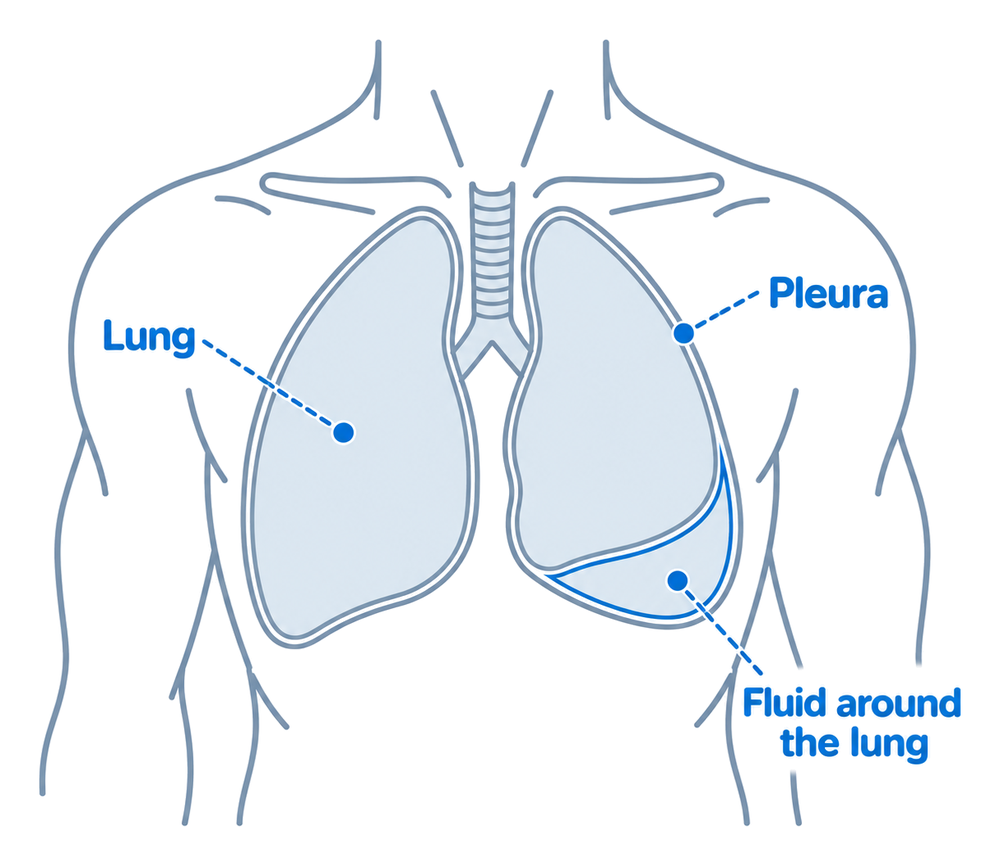
Two thin layers of tissue (the pleura) cover each lung and line the inside of the chest wall. The narrow space between them (the pleural space) normally holds only a little fluid, which lets the lung move smoothly as you breathe.
A collection of fluid in this space is called a pleural effusion, and air that has leaked into it is called a pneumothorax. Either can press on the lung and make breathing harder, and a pneumothorax can make part of the lung collapse. Please call triple zero (000) straight away for sudden, severe breathlessness or chest pain, and do not wait for an appointment.
These procedures work through the chest wall with a needle or a narrow tube, to drain fluid or air, take samples, or help stop fluid coming back.
Call triple zero (000) immediately if you are short of breath and any of these apply: you cannot speak in full sentences, you have pain in your chest, arm, or jaw, your skin is pale and sweaty, your lips are blue, or you feel drowsy or confused.
Do not wait for a routine appointment or drive yourself to hospital.
Pleural procedures take place in hospital, where the doctor explains the procedure, its risks, and any sedation before asking for your consent. Please tell the team about any worries you have.
For a pleural tap, you usually sit on the edge of the bed and lean forward onto a support, so the doctor can reach your back or side. For other procedures you may lie on your side. A small plastic tube (cannula) may be placed in a vein in your arm for medications, and staff check your oxygen level, pulse, and blood pressure.
An injection of local anaesthetic numbs the skin first. It stings briefly, and after that you may notice pressure or tugging, although it should not hurt. You may be asked to keep still and to hold your breath at times. Sedation, which makes you drowsy and relaxed, is often used for a thoracoscopy or an indwelling catheter.
Some people cough during the procedure. Please tell the staff if you feel short of breath or unwell. Afterwards a chest X-ray checks the lung and the position of any tube, and staff watch you for a few hours, so please allow plenty of time.
A respiratory physician may recommend a procedure to find the cause of fluid around the lung, to relieve breathlessness from fluid or air, or both.
Fluid around the lung has many possible causes, among them pneumonia or another chest infection, heart failure, and some conditions of the kidneys, liver, or lungs. A laboratory checks a sample of the fluid for signs of the cause, such as infection or abnormal cells, and the result helps the physician choose treatment.
A chest X-ray, an ultrasound, or a CT scan shows where fluid or air has collected, while a procedure can drain it and take samples. Sleepscope offers chest X-rays and CT scans through Scope Radiology, which is at M-City Clayton, in Melbourne's south-east. During a pleural procedure itself, the doctor usually uses ultrasound to find a suitable place for the needle or tube.
In a pleural tap (thoracentesis or pleural aspiration), a fine needle or thin tube is passed between two ribs. The doctor may take just a small sample to test, or drain more fluid to ease breathlessness.
A chest drain (intercostal catheter) is a tube that stays in place between the ribs for a time, connected to a sealed bottle. It drains air from a collapsed lung, or larger amounts of fluid, and comes out once the draining has slowed or stopped.
Pleurodesis puts sterile talc into the pleural space so that its two layers stick together, leaving less room for fluid or air to collect. The talc goes in through a chest drain or during a thoracoscopy. It does not work for everyone, and some people have a fever or chest pain for a day or two afterwards.
With an indwelling pleural catheter, a soft tube runs under the skin into the pleural space and stays as long as it is needed. Fluid can then be drained into a vacuum bottle without a trip to hospital. A visiting nurse can do the draining at home, or can teach someone close to you how to do it.
When other tests have not found the cause of the fluid, a medical thoracoscopy (pleuroscopy) can look inside the chest. A thin camera goes in through a small cut between the ribs, under sedation and local anaesthetic, and the doctor can also drain fluid and take small tissue samples (biopsies).
Please tell the hospital about any allergies, whether you are or might be pregnant, and whether you take blood-thinning or diabetes medications. The hospital will tell you whether any medications need to be stopped or changed beforehand, so please do not change them yourself.
The hospital will tell you when to stop eating and drinking, and if sedation is planned, someone will need to take you home.
Soreness and bruising where the needle or tube went in are common, and simple pain relief usually helps. The lung can partly collapse if air gets in around it during or after the procedure (a pneumothorax). A small amount of air often needs no treatment, and a larger amount may need a chest drain. Less common problems include bleeding, infection, and fluid building up inside the lung (pulmonary oedema), which makes breathing harder and is more likely when a large amount is drained quickly. Injury to a nearby organ is rare. The doctor will discuss the risks that apply to you before you decide whether to go ahead.
Please follow the hospital's instructions for caring for the wound, and check with your doctor before you fly. With an indwelling catheter, careful cleaning before each drainage helps keep infection from entering along the tube.
Please contact the hospital or your doctor promptly if you have a fever, redness, swelling, or discharge around the wound, or pain that simple pain relief does not ease. The same applies if the wound keeps bleeding, or if a drain falls out or stops draining. Call triple zero (000) if you become suddenly very short of breath or have severe chest pain.
You will need a valid referral from your GP or specialist for a respiratory consultation. The respiratory physician can discuss whether a pleural procedure would help and which one may suit you. The clinic can answer questions about the consultation and which previous test results to bring.
Fees are listed on each clinic's page, and the clinic will confirm them before your visit.
The consultation takes up to 30 minutes and needs no preparation. Please arrive 10 to 15 minutes early to complete the forms. After your visit, the respiratory physician will send a letter to your referring doctor.
Pleural procedures are not performed at Sleepscope clinics. They take place in hospital, and a Sleepscope respiratory physician can assess you and refer you. The hospital will give you its own instructions for the day.
Sleepscope physicians see patients at clinics in Victoria and Queensland. If you have a referral, our team can confirm the location and appointment details.
View clinic locationsNot at its clinics. They take place in hospital, and a Sleepscope respiratory physician can assess you and refer you. A consultation needs a valid referral from your GP or specialist.
It depends on the procedure. Many people go home the same day after a pleural tap, or after an indwelling pleural catheter is put in, once a chest X-ray has been checked. A chest drain usually keeps you in hospital until it comes out, and a thoracoscopy can also mean a night or more in hospital.
The doctor can usually talk with you about the procedure before you go home. Laboratory results on fluid or tissue samples take longer, often several days, and are usually discussed at a follow-up appointment. Before you leave hospital, please check who will explain the results.