


Insomnia
With insomnia, it is hard to get to sleep or stay asleep, or you wake too early, and you may feel tired during the day. At Sleepscope, a sleep physician can look for causes and discuss treatment.

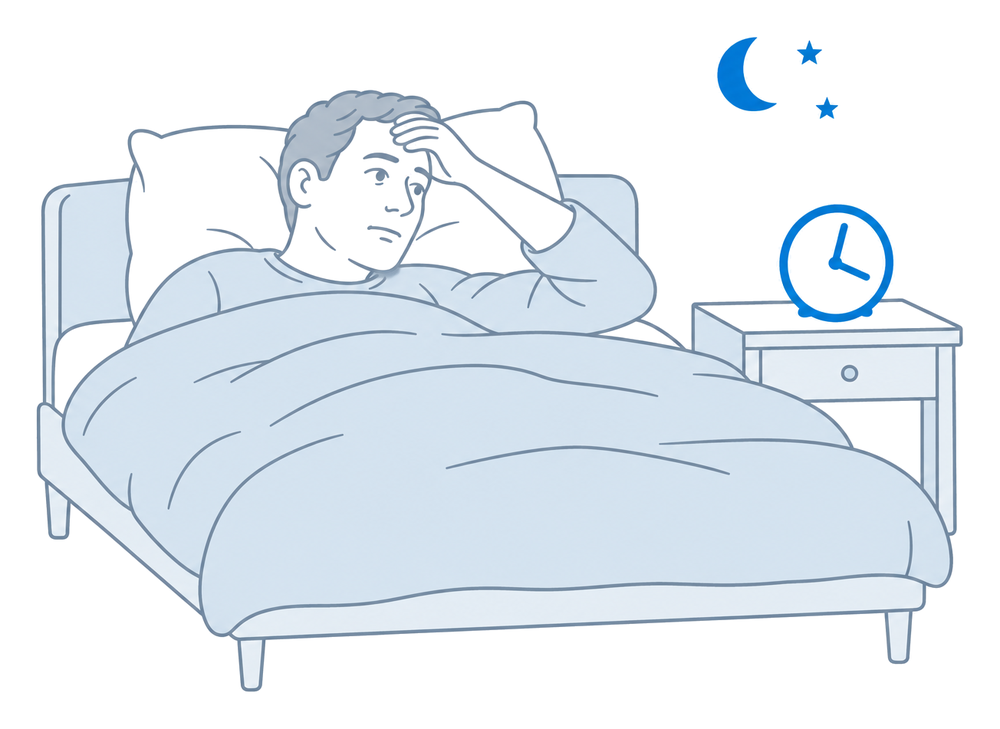
Insomnia means that sleep is hard to start or to keep going, or that it ends too early, even when there is enough time set aside for it. The next day, you may feel tired or irritable, or find it harder to concentrate and remember things.
It may last only a few nights or carry on for months. When poor sleep happens on three or more nights a week for at least three months and affects your day, doctors call it chronic insomnia.
Call triple zero (000) immediately if you are short of breath and any of these apply: you cannot speak in full sentences, you have pain in your chest, arm, or jaw, your skin is pale and sweaty, your lips are blue, or you feel drowsy or confused.
Do not wait for a routine appointment or drive yourself to hospital.
Doctors describe insomnia by how long it has lasted and what is keeping it going, and this shapes the treatment the sleep physician suggests.
Depression, anxiety, and long-term pain often come with insomnia. The insomnia can still be treated in its own right, and that can make the other condition easier to manage too.
Poor sleep for a few days or weeks is common after a stressful event, an illness, a change of medication, or travel across time zones. It usually improves on its own. Please see your doctor if it continues or becomes worse.
Once insomnia has lasted three months or more, habits and worries that have grown up around sleep often hold it in place, even after the first trigger has gone. Lying awake in bed for long periods, checking the clock, and dreading the next night are common examples, and changing them is the aim of cognitive behavioural therapy for insomnia, or CBT-I.
Insomnia and obstructive sleep apnoea often occur together. Loud snoring, pauses in breathing that someone has noticed, or waking with a choking feeling can point to sleep apnoea, which has its own tests and treatment.
Please describe when you go to bed and get up, how long it takes you to fall asleep, and how often and for how long you wake. Say how you feel the next day, how long the problem has lasted, and whether something set it off. A sleep diary kept for at least a week, with your bedtimes, waking times, and naps, shows the doctor the whole pattern.
Please also mention anything that disturbs your sleep, such as pain, snoring, breathing problems, needing to pass urine at night, or hot flushes. List every medication and supplement you take, including those bought without a prescription, and how much caffeine, alcohol, or nicotine you use.
If you have been feeling low or anxious, please tell your doctor, because mood and sleep can affect each other. Dozing off during the day can have other causes, such as sleep apnoea, so please mention it too, and do not drive while you feel drowsy.
Treatment depends on what started the insomnia and what keeps it going. If another condition, a medication, or a sleep disorder such as sleep apnoea plays a part, your doctor will look at that as well.
Regular sleep habits help. Get up at about the same time every day, keep caffeine to the morning, avoid alcohol and nicotine in the evening, and keep the bedroom quiet, dark, and comfortable. If you are still awake after a while, get up and do something calm in another room until you feel sleepy, then go back to bed. For chronic insomnia, though, good habits alone are often not enough.
Cognitive behavioural therapy for insomnia, or CBT-I, is an established treatment for chronic insomnia, and it is the treatment Australian guidelines advise trying first. Over several sessions, it explains how sleep works and deals with the habits and thoughts that keep insomnia going. Common steps include keeping a fixed wake time, using the bed only for sleep, and spending less time in bed for a while. Sleep can seem worse in the first weeks, and some people feel sleepier during the day, so please do not drive while you feel sleepy. The sleep physician can discuss whether CBT-I may suit you and refer you.
Sleeping tablets may help for a few nights or weeks. Taken often, they tend to work less well and can lead to dependence, so doctors usually prescribe them only for short periods. Melatonin, a hormone the body makes at night, is also available as a medication, and because it causes drowsiness, it should not be taken before driving. Please speak with your doctor before taking either.
The sleep physician diagnoses insomnia from your description of your sleep, often helped by a sleep diary and a short questionnaire. A sleep study is not usually needed.
If the sleep physician suspects sleep apnoea or another sleep disorder, they may recommend a home based sleep study. It records your breathing, heart rate, oxygen level, and muscle activity while you sleep in your own bed. Some people need an in-lab sleep study in a hospital sleep laboratory instead, and the sleep physician can refer you.
You will need a valid referral from your GP or specialist for a sleep consultation. The sleep physician will ask about your sleep habits and how your symptoms affect daily life, review your medical history and medications, and may recommend further tests. They will also give you guidance on managing your symptoms.
Fees are listed on each clinic's page, and the clinic will confirm them before your visit.
The consultation takes up to 30 minutes and needs no preparation, although a sleep diary from the weeks before is helpful to bring. Please arrive 10 to 15 minutes early to complete the forms. After your visit, the sleep physician will send a letter to your referring doctor.
Sleepscope physicians see patients at clinics in Victoria and Queensland. If you have a referral, our team can confirm the location and appointment details.
View clinic locationsYes, with a valid referral from your GP or specialist. A Sleepscope sleep physician can look for what started the insomnia and what keeps it going. They can also discuss whether cognitive behavioural therapy for insomnia (CBT-I) may suit you and refer you.
No. Tips about caffeine, screens, and regular bedtimes can be part of it, but CBT-I is a structured treatment over several sessions, usually weekly, that also works on the thoughts and patterns that keep insomnia going. It may be given by a trained psychologist or GP, in a group, or through an online program.
Please talk to your doctor first. Stopping quickly after regular use can cause withdrawal symptoms and a spell of worse sleep (rebound insomnia). Your doctor can plan a gradual reduction, and CBT-I can support you while you cut down.