

Bronchoscopy
A bronchoscopy uses a thin, flexible tube with a camera to look inside the airways and take samples, for example to find the cause of a cough. It takes place in hospital, and a Sleepscope respiratory physician can assess you.
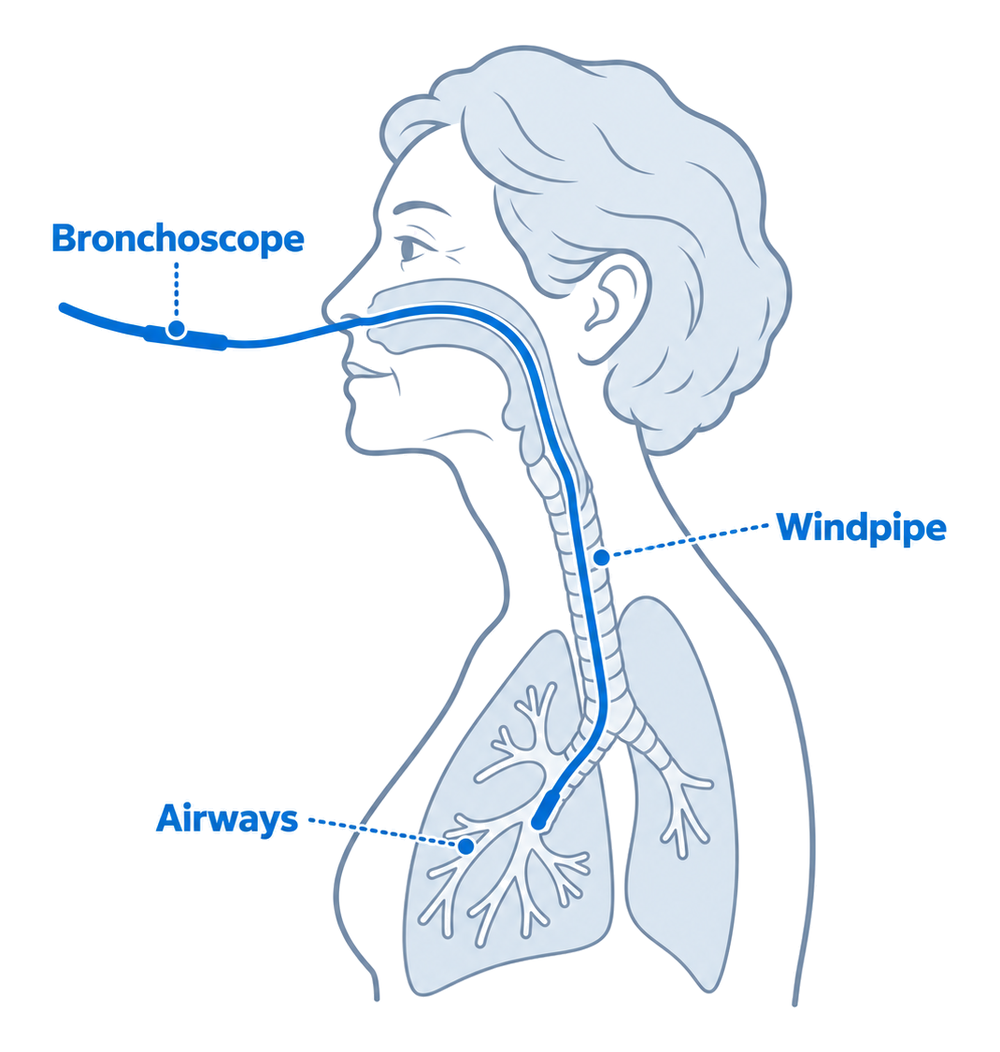
The windpipe (trachea) carries air down into the chest, where it divides into the airways (bronchi) of each lung. For a bronchoscopy, a doctor passes a thin, flexible tube called a bronchoscope through your nose or mouth, past the vocal cords, and down the windpipe into the airways.
A small camera at the tip of the bronchoscope sends pictures to a screen, so the doctor can see the lining of the airways. Small tools passed down the tube can take samples. A brush or a needle collects cells, and small forceps take tiny pieces of tissue (a biopsy). Salt water (saline) can also be washed in and drawn back out to collect cells from the smaller airways. Sometimes ultrasound or X-ray pictures help the doctor steer the bronchoscope. You can breathe throughout the procedure.
Call triple zero (000) immediately if you are short of breath and any of these apply: you cannot speak in full sentences, you have pain in your chest, arm, or jaw, your skin is pale and sweaty, your lips are blue, or you feel drowsy or confused. Call triple zero (000) as well if you cough up a lot of blood.
Do not wait for a routine appointment or drive yourself to hospital.
A bronchoscopy takes place in hospital, and you can usually go home the same day. The hospital team explains the procedure and the sedation before asking for your consent. Please tell them about any worries you have.
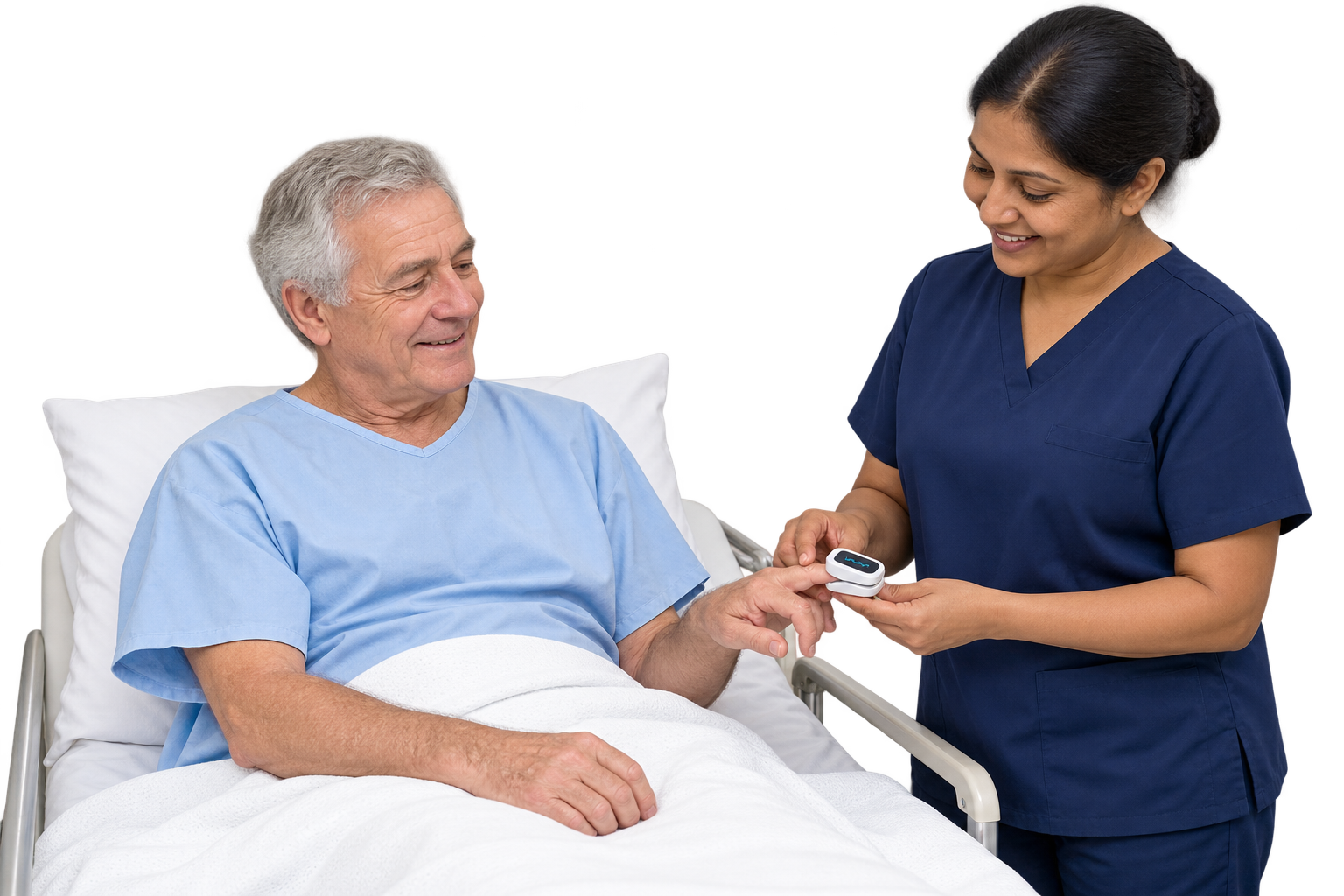
A small plastic tube (cannula) is placed in a vein in your hand or arm for medications. Staff check your oxygen level with a clip on your finger during the procedure and recovery.
A bronchoscopy is usually done with mild sedation, which makes you relaxed and drowsy but not fully asleep, and you may remember little of it afterwards. A local anaesthetic spray numbs the back of your nose and throat to reduce coughing and discomfort, and you may be given a medication to reduce saliva.
You lie on the bed with your head raised a little. The doctor then guides the bronchoscope into your airways through your nose or mouth, which may feel uncomfortable or make you cough. The tube can make it feel hard to catch your breath, although air still passes around it, so you can breathe and get enough oxygen.
The doctor looks at the airways and takes any samples needed. The bronchoscope is usually in place for about 20 minutes, although this depends on what is needed. You then rest in a recovery area while the sedation wears off, so please allow extra time on the day.
A bronchoscopy can help find the cause of symptoms such as a long-lasting cough, coughing up blood, wheezing, or shortness of breath. It may also be recommended when a chest X-ray or CT scan shows a change that needs a closer look.
Samples taken during the procedure go to a laboratory, where they are checked for infection, inflammation, or abnormal cells. The results can help the respiratory physician confirm a diagnosis, such as a lung infection or some types of interstitial lung disease, and choose treatment.
A bronchoscopy can also treat some airway problems, for example by clearing thick mucus or removing something that has been breathed in. The doctor will explain what your procedure is for and what it will involve.
A chest X-ray or CT scan takes pictures of the lungs from outside the body, and a lung function test shows how well the lungs work. These tests give the doctor information about the lungs, and a bronchoscopy may be recommended when the doctor needs to see inside the airways or take samples. Sleepscope offers chest X-rays and CT scans through Scope Radiology, which is at M-City Clayton, in Melbourne's south-east.
Sometimes the bronchoscope carries a small ultrasound probe, and a needle passed through it can take samples from glands (lymph nodes) beside the airways. This is called endobronchial ultrasound (EBUS).
You may have a sore throat, a hoarse voice, or a cough for a few days afterwards, and some people have a mild fever for a day or two. A small amount of blood in the phlegm can follow if samples were taken.
Less common problems include bleeding, infection, breathing difficulty, and air leaking from the lung into the chest (a pneumothorax), which is treated straight away if it happens. Your oxygen level can fall during the procedure, so staff check it throughout. Please tell the doctor about any bleeding problems or blood-thinning medications, and about other lung conditions, because they can affect the risk.
Please tell the hospital about any allergies, whether you are or might be pregnant, and whether you take blood-thinning medications, anti-inflammatory pain relievers, or diabetes medications. The hospital will tell you whether to stop any of your medications beforehand, so please do not change them yourself.
The hospital will also tell you when to stop eating and drinking, often about six hours before. An empty stomach lowers the risk of stomach contents entering the lungs during sedation. Please make sure someone can take you home afterwards.
The throat spray numbs your throat and affects swallowing for a while. Please do not eat or drink until the numbness has worn off and staff have checked that you can swallow, often with a few sips of water.
Because of the sedation, please follow the hospital's advice about driving, alcohol, and signing important papers afterwards. Feeling awake does not always mean the sedation has worn off.
Please contact the hospital promptly if you cough up more than a small amount of blood, have a fever that does not settle, or still feel unwell after a few days. Seek urgent medical care for chest pain or trouble breathing.
You will need a valid referral from your GP or specialist for a respiratory consultation. The respiratory physician can discuss whether a bronchoscopy would help and what it would involve. The clinic can answer questions about the consultation and which previous test results to bring.
Fees are listed on each clinic's page, and the clinic will confirm them before your visit.
The consultation takes up to 30 minutes and needs no preparation. Please arrive 10 to 15 minutes early to complete the forms. After your visit, the respiratory physician will send a letter to your referring doctor.
A bronchoscopy is not performed at Sleepscope clinics. It takes place in hospital, and a Sleepscope respiratory physician can assess you and refer you. The hospital will give you its own instructions for the day.
Sleepscope physicians see patients at clinics in Victoria and Queensland. If you have a referral, our team can confirm the location and appointment details.
View clinic locationsNot at its clinics. It takes place in hospital, and a Sleepscope respiratory physician can assess you and refer you. A consultation needs a valid referral from your GP or specialist.
Usually you are drowsy rather than fully asleep. The mild sedation helps you relax, and you may remember little of the procedure afterwards. The hospital will explain the sedation planned for you before you give your consent.
The doctor may be able to tell you what the airways looked like on the day. Laboratory results on samples take longer, often a few days, and are usually discussed at a follow-up appointment. Before you leave hospital, please check who will explain the results.