

Restless Legs Syndrome
Restless legs syndrome causes an urge to move the legs, often worse in the evening and at night. At Sleepscope, a sleep physician can look for a cause and discuss ways to ease the symptoms.

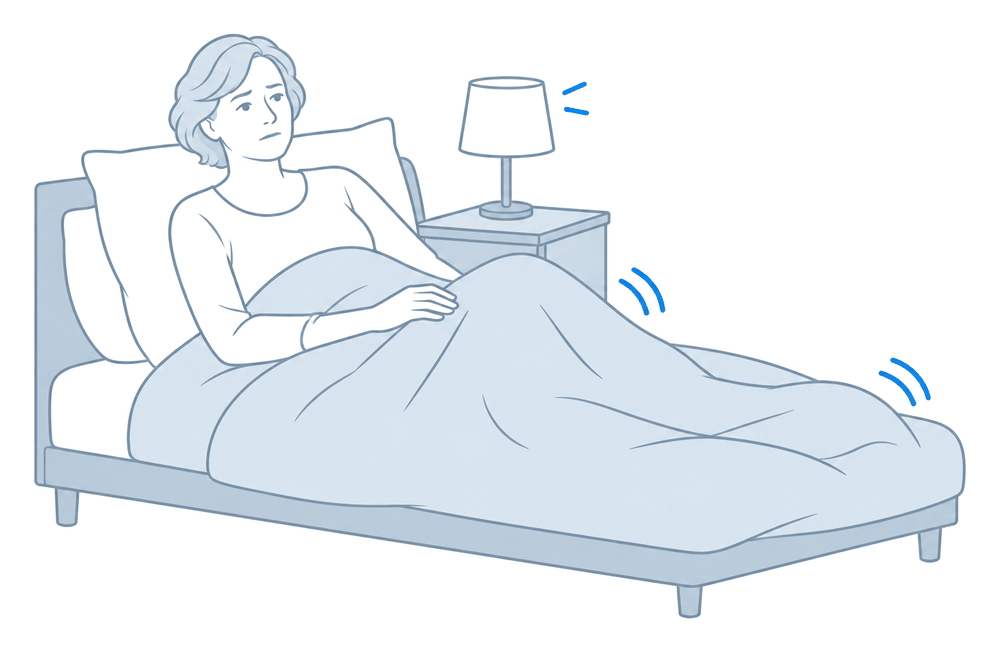
The main symptom of restless legs syndrome (RLS) is a strong urge to move the legs, and there is usually an unpleasant feeling in them too. People describe the feeling as crawling, tingling, pulling, aching, or itching, and it is not always painful. The arms can be affected as well.
The urge starts or becomes worse when you sit or lie still, and moving, stretching, or walking eases it for as long as the movement continues. The symptoms are usually at their worst in the evening and at night, which can make it difficult to get to sleep and can wake you during the night. Poor sleep can then leave you tired or irritable the next day.
Doctors diagnose restless legs syndrome from this pattern of symptoms, after checking for other conditions that feel similar. There is no single test for it, although blood tests can look for a cause, such as low iron.
Call triple zero (000) immediately if you are short of breath and any of these apply: you cannot speak in full sentences, you have pain in your chest, arm, or jaw, your skin is pale and sweaty, your lips are blue, or you feel drowsy or confused.
Do not wait for a routine appointment or drive yourself to hospital.
These conditions are easy to confuse, but they feel different and are checked in different ways.
The main feature is an urge to move that you feel while you are awake and resting. It builds while you stay still and eases once you move. Sitting for a long time can bring it on, for example on a long car trip, on a flight, or at the cinema, as can lying down to sleep.
These are repeated jerks or twitches of the legs, and sometimes the arms, that happen during sleep. A bed partner often notices them first. Many people with restless legs have them too, but they also occur in people without restless legs and become more common with age. They only need treatment if they disturb sleep or cause tiredness during the day.
A cramp is a sudden, painful tightening of a muscle, often in the calf or foot. It usually passes within seconds or minutes, and gently stretching or massaging the muscle can help. Please see your doctor about cramps that happen often, or about any cramp that lasts more than a few minutes.
Aching muscles, arthritis, swollen legs, vein problems, and the discomfort of staying in one position can all feel like restless legs. Your doctor will ask how the feeling changes with rest, movement, and the time of day to tell them apart.
Start with what the feeling is like and when it comes on. Does it begin when you sit or lie still? Does moving ease it, and is it worse in the evening or at night?
Please tell the doctor how often symptoms occur and how they affect your sleep and the following day. If a bed partner has noticed your legs jerking during sleep, pass that on. Mention pregnancy, low iron, kidney problems, diabetes, and any relative with restless legs, and list every medication you take, including those bought without a prescription.
Please get urgent medical help for a sore or aching leg that is also swollen, red and warm, numb and weak, or unusually cool or pale. Call triple zero (000) if leg pain comes with chest pain or difficulty breathing. Do not assume these symptoms are restless legs syndrome. If you often feel drowsy during the day, please tell your doctor, and stop driving if you feel sleepy at the wheel.
Treatment aims to ease the urge to move and improve your sleep. The plan will depend on how often symptoms occur, how much they disturb your sleep, and whether a cause has been found.
If low iron, another condition, or a medication you take is behind the symptoms, dealing with that comes first. Your doctor may recommend iron if a blood test shows you need it. Please see your doctor before taking iron supplements, because too much iron can be harmful and the reason for low iron needs to be found.
Many people manage their symptoms with simple measures alone. Cutting back on caffeine, alcohol, and nicotine can help, as can regular exercise and good sleep habits. A hot bath, a heat or ice pack, leg massage, or stretching may ease symptoms when they start.
If symptoms still disturb your sleep or daily life, your doctor may suggest a medication. Several types are used, and each has side effects to weigh up. A medication may stop working over time, and with one group, symptoms can come back stronger or earlier in the day. Please tell your doctor if that happens, and do not stop or change a prescribed medication without advice.
Your doctor will start with your description of the symptoms, your medical history, and the medications you take, and may examine you. Blood tests can look for a cause. Iron levels and kidney function are commonly checked, because low iron and kidney problems can bring on restless legs. Restless legs can also occur alongside diabetes or nerve damage in the legs, and it is common late in pregnancy. Your GP or the sleep physician can refer you for blood tests, which a separate pathology service carries out.
A sleep study is not routinely needed for restless legs. One may be suggested if another sleep problem is suspected, such as obstructive sleep apnoea, which may make restless legs worse. A home based sleep study records your breathing, heart rate, oxygen level, and muscle activity while you sleep in your own bed.
Limb movements during sleep are measured with an overnight sleep study that uses sensors on the legs. These movements also occur in people without restless legs, so the result is read together with your symptoms. If your doctor recommends a study in a sleep laboratory, the sleep physician can refer you to a hospital for an in-lab sleep study.
You will need a valid referral from your GP or specialist for a sleep consultation. The sleep physician will ask about your sleep habits and how your symptoms affect daily life, review your medical history and medications, and may recommend further tests. They will also give you guidance on managing your symptoms.
Fees are listed on each clinic's page, and the clinic will confirm them before your visit.
The consultation takes up to 30 minutes and needs no preparation. Please arrive 10 to 15 minutes early to complete the forms. After your visit, the sleep physician will send a letter to your referring doctor.
Sleepscope physicians see patients at clinics in Victoria and Queensland. If you have a referral, our team can confirm the location and appointment details.
View clinic locationsYes. A GP or specialist can refer you to a Sleepscope sleep physician for restless legs syndrome. Blood tests are done by a separate pathology service, and if a study in a sleep laboratory is needed, the sleep physician can refer you to a hospital.
Usually not. Doctors diagnose restless legs syndrome from your symptoms. A sleep study may be suggested if another sleep problem, such as sleep apnoea, is suspected, or to measure leg movements during sleep.
Restless legs syndrome is common in the later months of pregnancy and usually settles once the baby is born. Please see your doctor or midwife if it is disturbing your sleep, and speak with your doctor before taking any medication or iron supplement while pregnant.
Some can, including certain antihistamines, antidepressants, and anti-nausea medications. Please tell your doctor about everything you take, and do not stop a prescribed medication without talking to your doctor first.