Our Services
Pre-operative Lung Assessment

Pre-operative Lung Assessment

An operation and anaesthetic can affect breathing, particularly for people who smoke or have some lung conditions. At Sleepscope, a respiratory physician can assess your lungs before surgery. Your surgeon and anaesthetist make the decisions about your operation.

Illustrative consultation about lung health before an operation.

Why check your lungs before surgery?

Breathing problems, such as a chest infection, are among the possible complications of an anaesthetic and an operation. They are more likely in people who smoke and in people with some lung conditions, including chronic obstructive pulmonary disease (COPD).

A pre-operative lung assessment looks at how well your lungs work and whether a lung condition is as well controlled as it can be before the operation. The findings can inform your surgeon's and anaesthetist's plans, for example about treatment beforehand, the timing of the operation, or your care afterwards.

Before an operation to remove part of a lung, spirometry and a gas transfer test also help estimate how well you are likely to breathe afterwards. The assessment helps your surgical team plan, although it cannot remove every risk of surgery.

Need urgent care?

Call triple zero (000) immediately if you are short of breath and any of these apply: you cannot speak in full sentences, you have pain in your chest, arm, or jaw, your skin is pale and sweaty, your lips are blue, or you feel drowsy or confused.

Do not wait for a routine appointment or drive yourself to hospital.

What happens at the assessment?

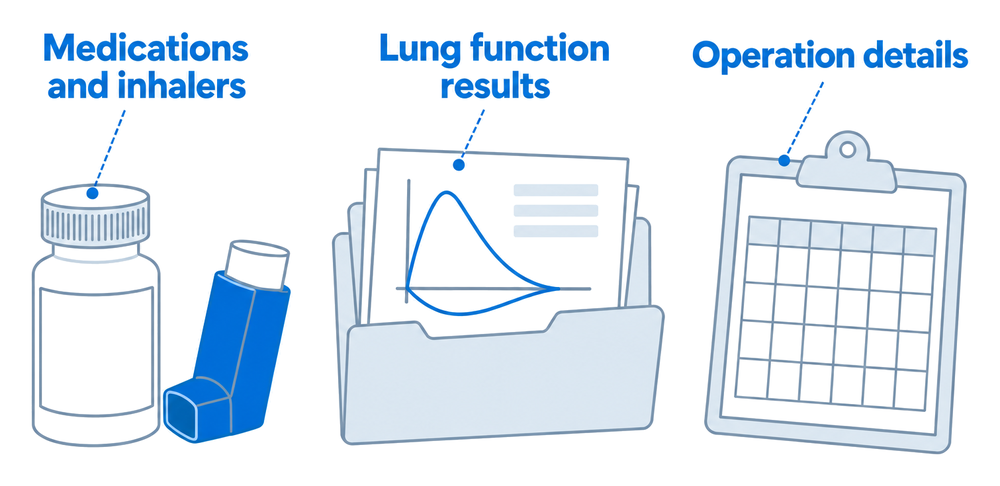
Medications and inhalers, earlier lung function results and details of the planned operation.

Your breathing and everyday activity

The respiratory physician will ask about breathlessness, cough, wheezing, and any recent flare-ups or chest infections, and will examine you. How far you can walk, or how many stairs you can climb before you need to stop, helps show how your body copes with activity. Please mention any recent change in your breathing.

Your health and the planned operation

Please describe the planned operation and its date, if known, and any problems you or your family have had with anaesthesia. The physician will also ask about your general health, smoking or vaping, any heart condition or sleep apnoea, and the medications and inhalers you use.

Advice after the assessment

The physician will explain the findings, any tests or changes to treatment, and what they may mean for your operation. Please make sure your surgeon and anaesthetist know the results, and tell your doctor about any new or worsening breathing symptoms before the operation, even after the assessment.

When might you need a lung assessment before surgery?

Whether you need one depends on your lungs, your general health, and the planned operation. Your GP, surgeon, or anaesthetist may suggest one for reasons such as:

  • A lung condition: COPD, asthma, bronchiectasis, interstitial lung disease, or another long-term lung condition, including a check of how well it is controlled.
  • Breathing symptoms or smoking: breathlessness, a cough, wheezing, finding everyday activity harder than before, or smoking or vaping, now or in the past.
  • The planned operation: surgery on the lungs or elsewhere in the chest, major surgery on the abdomen, or another operation where your anaesthetist would like advice about your breathing.

Your surgery and your lungs

Decisions about the operation

The respiratory physician gives advice about your lungs and breathing. You, your surgeon, and your anaesthetist then decide what that means for the operation and the anaesthetic, taking your other health conditions and your preferences into account.

Sometimes the findings change the plan, for example with treatment to improve your breathing first, a change in timing, a different anaesthetic approach, or closer care after the operation. For some people with COPD, a pulmonary rehabilitation program of exercise and education before surgery may help. Programs run outside Sleepscope, through hospital and community services, and your GP or respiratory physician can refer you.

Smoking, inhalers, and other medications

If you smoke, stopping before the operation can lower the chance of breathing and wound problems. Please stop vaping as well, and ask your GP or pharmacist for help to quit.

Please keep using your inhalers and other medications as prescribed, and do not stop or change any of them before surgery without your doctors' advice. The hospital will tell you which medications to take on the day of the operation.

Which tests might you need?

You will not necessarily need new tests. The respiratory physician will look at any earlier results alongside your symptoms, your health, and the planned operation.

Breathing tests

Spirometry measures how much air you can breathe out and how fast. A lung function test adds a gas transfer test, which shows how well oxygen moves from the lungs into the blood. Both are available at some Sleepscope clinics, and some inhalers need to be stopped beforehand, as each test's page explains.

Chest X-ray and CT

A chest X-ray is one of the tests often requested before surgery, and a CT scan shows the lungs in more detail. Sleepscope offers chest X-rays and CT scans through Scope Radiology, which is at M-City Clayton, in Melbourne's south-east.

Heart, sleep, and blood tests

Your surgical team may also want your heart checked, for example with an echocardiogram, an ultrasound scan of the heart. The physician may refer you for one at Heartscope, a cardiology service. If loud snoring or pauses in your breathing at night suggest sleep apnoea, please tell your anaesthetist, and a pre-operative sleep assessment with a sleep physician may help.

Blood tests can check for anaemia (a low red blood cell count), which reduces how much oxygen the blood carries. The respiratory physician can refer you for them, and a separate pathology service carries them out.

If you have been referred to Sleepscope

You will need a valid referral from your GP or specialist for a respiratory consultation. It helps if the referral names the planned operation, its date if known, and any questions from your surgeon or anaesthetist.

Fees are listed on each clinic's page, and the clinic will confirm them before your visit.

The consultation takes up to 30 minutes and needs no preparation. If spirometry or a lung function test is booked as well, some inhalers need to be stopped beforehand, as set out on that test's page.

Please arrive 10 to 15 minutes early to complete the forms. After your visit, the respiratory physician will send a letter to your referring doctor.

What to bring

  • Your GP or specialist referral and any letters about your operation.
  • Your Medicare card.
  • A list of your medications and doses, and your inhalers.
  • Any previous lung function results and scan reports.

Where you can be seen

Sleepscope physicians see patients at clinics in Victoria and Queensland. If you have a referral, our team can confirm the location and appointment details.

View clinic locations

Common questions

Does Sleepscope provide a lung assessment before surgery?

Yes, with a valid referral from your GP or specialist. A Sleepscope respiratory physician assesses your lungs and breathing and advises you, and your surgeon and anaesthetist make the decisions about your operation and anaesthetic.

Does the assessment clear me for surgery?

No. The respiratory physician advises about your lungs and breathing. Your surgeon and anaesthetist decide whether and how the operation goes ahead, looking at the findings alongside your other health conditions.

When should I stop smoking before surgery?

Please stop as early as you can, and ask your GP or pharmacist for help to quit. Stopping for a few weeks or more before the operation helps your wounds heal, and a longer time without smoking also benefits your lungs. Even if the operation is only days away, it is still worth stopping.

Do I still need the hospital's pre-admission appointment?

Yes, if the hospital asks you to attend. You will still meet your anaesthetist before the operation, and you will need to follow the hospital's instructions, including about eating and drinking, even after a lung assessment.