

Pulmonary Hypertension
Pulmonary hypertension is raised blood pressure in the arteries of the lungs, which can cause breathlessness and tiredness. At Sleepscope, a respiratory physician can investigate your symptoms and look for the cause.

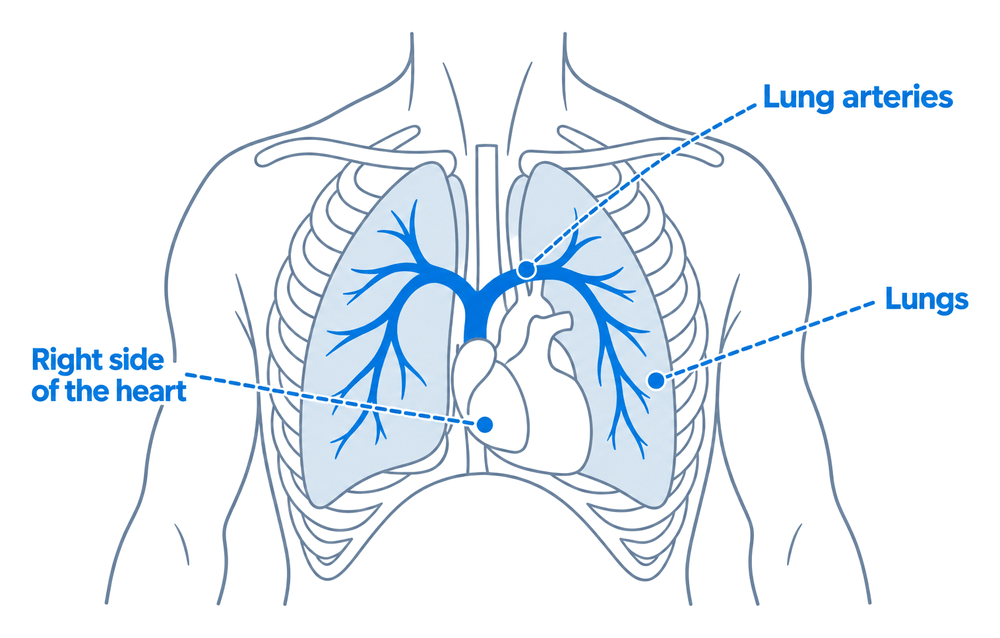
The lung arteries (pulmonary arteries) carry blood from the right side of the heart to the lungs, where it picks up oxygen. In pulmonary hypertension, the pressure inside these arteries stays higher than it should, so the right side of the heart must pump harder to move blood through them.
There are many possible causes, and the cause guides treatment. In one rare type, pulmonary arterial hypertension (PAH), the disease starts in the blood vessels of the lungs themselves. The condition affects each person differently, and treatment aims to ease symptoms and slow the changes in the heart and lungs.
Call triple zero (000) immediately if you are short of breath and any of these apply: you cannot speak in full sentences, you have pain in your chest, arm, or jaw, your skin is pale and sweaty, your lips are blue, or you feel drowsy or confused. Call triple zero (000) as well if you cough up a lot of blood.
Do not wait for a routine appointment or drive yourself to hospital.
When the pressure in the lung arteries rises, three linked changes can follow, and tests show how much each one is affected.
The lung arteries can become narrowed, or blocked by old clots, so blood passes through them less easily. An echocardiogram can estimate the pressure in these arteries, and a right heart catheter test measures it directly.
The right side of the heart has to push blood through the narrowed arteries. Over time, the extra effort can strain it, which can lead to swelling in the legs or abdomen. Treatment aims to ease this strain.
When blood moves less easily through the lungs, less oxygen reaches the rest of the body, which adds to breathlessness and tiredness. A small clip on your finger checks your oxygen level, and a lung function test shows how well oxygen passes from the lungs into the blood.
Many conditions can raise the pressure in the lung arteries. They include heart failure and valve disease on the left side of the heart, and lung conditions such as COPD, pulmonary fibrosis, and sleep apnoea. Other causes include old blood clots that have not cleared, connective tissue diseases such as scleroderma, liver or kidney disease, HIV, some medicines or drugs, and inherited conditions. Sometimes no cause is found.
Early symptoms are easy to miss and can be put down to getting older or being less fit. Symptoms can include:
These symptoms do not always mean pulmonary hypertension, because many heart and lung conditions cause similar symptoms. Your doctor will ask about them, examine you, and look at test results to work out the cause.
Treatment depends on the type of pulmonary hypertension and its cause. When a heart or lung condition, sleep apnoea, or old blood clots are behind it, treating that condition is an important part of care. For pulmonary arterial hypertension, some medications open up the blood vessels of the lungs, which eases the work of the heart. They may be taken as tablets, breathed in, or given into a vein, and some people need more than one.
Other medications may be added, such as fluid tablets (diuretics) for swelling and, for some people, blood thinners. Pulmonary arterial hypertension is rare and its treatment can be complex, so ongoing care usually involves a specialist pulmonary hypertension centre. The respiratory physician can refer you to one. Please take your medications as prescribed, and talk to your doctor before you stop or change any of them.
Staying active helps, and your healthcare team can advise which activity suits you. A pulmonary rehabilitation program teaches exercises and ways to manage breathlessness. Programs run outside Sleepscope, through hospital and community services, and your GP or respiratory physician can refer you.
Please ask your doctor about vaccinations against flu, pneumococcal disease, and COVID-19, which help protect against chest infections. Quitting smoking or vaping helps your heart and lungs, and your doctor can help. If your legs or abdomen swell, your doctor may advise eating less salt and limiting how much you drink.
If you could become pregnant, please talk to your specialist about contraception and about any plans for a pregnancy, because pregnancy can carry serious risks with this condition. Living with pulmonary hypertension can be hard on you and your family, so please tell your doctor how you are feeling, because support is available.
Diagnosis brings together your symptoms, an examination, and tests of the heart and lungs, which also look for the cause.
An echocardiogram, an ultrasound scan of the heart, can estimate the pressure in the lung arteries and show how the right side of the heart is coping. An electrocardiogram (ECG) records the heart's electrical activity. The physician may refer you for these tests at Heartscope, a cardiology service.
Spirometry and a lung function test look for lung conditions that can raise the pressure. Both are available at some Sleepscope clinics, and some inhalers need to be stopped beforehand, as each test's page explains. A chest X-ray or CT scan takes pictures of the lungs. Sleepscope offers both through Scope Radiology, which is at M-City Clayton, in Melbourne's south-east. Blood tests can look for related conditions. The respiratory physician can refer you for them, and a separate pathology service carries them out.
A lung scan that compares the flow of air and blood (a ventilation perfusion scan) can show whether old clots are blocking the arteries. A right heart catheter test measures the pressure directly and is usually needed to confirm pulmonary arterial hypertension. It takes place in hospital at specialist centres, and the physician can refer you for either test.
Your GP or specialist can refer you for a respiratory consultation to investigate your symptoms or to discuss a diagnosis of pulmonary hypertension. The respiratory physician will ask about your breathing and how it affects daily life, and review your medical history, medications, and any heart or lung test results.
Fees are listed on each clinic's page, and the clinic will confirm them before your visit.
The consultation takes up to 30 minutes and needs no preparation. If spirometry or a lung function test is booked as well, some inhalers need to be stopped beforehand, as set out on that test's page.
Please arrive 10 to 15 minutes early to complete the forms. After your visit, the respiratory physician will send a letter to your referring doctor.
Sleepscope physicians see patients at clinics in Victoria and Queensland. If you have a referral, our team can confirm the location and appointment details.
View clinic locationsYes, with a valid referral from your GP or specialist, either to find out whether you have pulmonary hypertension or to talk about your treatment. Sleepscope offers chest X-rays and CT scans through Scope Radiology. Other tests, such as blood tests, may be done by another provider. An echocardiogram can be done at Heartscope, a cardiology service, and a right heart catheter test takes place in hospital.
No. The blood pressure your doctor measures on your arm is the pressure in the arteries that supply the rest of the body. In pulmonary hypertension, the raised pressure is in the lung arteries, between the right side of the heart and the lungs.
Please see your GP or specialist promptly if your breathlessness, tiredness, or swelling becomes worse, or if you feel dizzy or faint. Call triple zero (000) if you have sudden shortness of breath or chest pain. Do not wait for a routine appointment.
Pulmonary hypertension affects each person differently, and how it changes depends on its type and cause. Your specialist can explain what your test results mean for you, and regular reviews check how well treatment is working. Early treatment can help how you feel day to day.